


Have you ever felt like the market might be hinting at what comes next? Technical analysis looks at old price changes and trading volumes (how much of a stock is traded) to guess future trends.
Over a hundred years ago, Charles Dow noticed that old price charts often repeated patterns. Since then, traders have been watching these charts closely.
When clear patterns appear, it’s like getting a sneak peek into the market’s mood. In simple terms, technical analysis shows a roadmap of past movements that can help guide future decisions.
what is technical analysis Empowers Trading Strategies

Technical analysis gathers clues from past price movements and trading volumes to offer hints about what might happen next. It all started over a century ago when Charles Dow scribbled down his observations, setting the stage for what's known as Dow Theory. Essentially, he noticed that price action tells a story, one that repeats itself, revealing trends as if the market were whispering its secrets.
When traders plot historical prices on charts, they start to see familiar patterns. For example, noticing a series of peaks and valleys might suggest that a trend is about to flip. It’s interesting to think that Charles Dow once sketched on paper, and those simple drawings still spark insights today. The straightforward idea is that past price moves can shine a light on future market behavior.
Unlike strategies that focus on a company’s financial details, technical analysis tunes in to the market's rhythm. It relies on the idea that visible price action reflects the overall mood of the market. By catching these repeating patterns, traders can decide when to enter or exit trades, trusting that history often nudges us toward tomorrow's moves.
Chart Pattern Analysis for Price Movement

Chart pattern analysis helps you see price action clearly by highlighting repeated shapes on trading charts. These familiar patterns act like hints, pointing out when prices might change direction or continue along the same path.
Take the Head and Shoulders pattern, for instance. It forms when three peaks appear, with the middle peak being the highest. When the price breaks a connecting line, called the neckline, it often suggests a trend reversal. Then there’s the Double Top or Bottom. This pattern shows two similar peaks or dips, hinting at a potential change in direction.
Triangles are another key example. In an Ascending or Descending Triangle, one side stays flat while the other moves up or down. This compression usually signals that a breakout is coming soon. And have you noticed Flags and Pennants? These are short pauses after a strong move and they often forecast that the trend will keep going. Rectangles, on the other hand, show prices bouncing between a clear top and bottom line, setting the stage for a breakout once that range is finally broken.
Here’s a quick look at the key patterns:
| Pattern | Description |
|---|---|
| Head and Shoulders | Three peaks with the center highest; a break of the neckline suggests a reversal. |
| Double Top/Bottom | Two similar peaks or troughs hinting at a potential shift in price direction. |
| Ascending/Descending Triangles | A flat side meets an upward or downward line, indicating a possible breakout. |
| Flags and Pennants | Short consolidation phases that usually lead to a continuation of the trend. |
| Rectangles | Prices trade within a horizontal range and may break out when a support or resistance level is breached. |
These insights can really help you gauge market moods and time your trades more effectively. Next, you might want to check out guides like How to Read Equity Market Charts or use Day Trading Chart Patterns for a deeper dive into these shapes.
Trading Indicators Overview: Common Technical Tools

Trading indicators are like friendly hints that help you catch the market’s mood so you know when to buy or sell. Take the moving average, for example. The Simple Moving Average (SMA) calculates the average price over 50, 100, or 200 days to smooth out everyday ups and downs. On the other hand, the Exponential Moving Average (EMA) gives more weight to recent prices, so it’s quicker to catch shifts, almost like checking the market’s heartbeat in real time.
Another great tool is the Relative Strength Index (RSI). It looks at the last 14 days of data and gives you a number between 0 and 100. When the RSI climbs toward 70, it might mean the market is too high (overbought), and when it drops to around 30, it might be too low (oversold). Fun fact: many traders have turned a tricky market into wins just by watching how the RSI changes.
The MACD also provides a friendly nudge by comparing two EMAs, usually the 12- and 26-day ones, with a 9-day signal line. When the MACD line goes above the signal line, it often hints at a good time to buy; when it dips below, it might be a signal to sell.
Bollinger Bands help you see market swings by combining a 20-day SMA with two extra lines that are two standard deviations away. A move outside these bands can be a quick sign that something’s changing fast. And then there’s On-Balance Volume (OBV), which adds or subtracts volume based on price moves to give clues about whether buyers or sellers are gaining control.
| Indicator | Calculation | Signal Interpretation |
|---|---|---|
| SMA & EMA | Average of prices over 50-, 100-, 200-day periods | Smooths out daily ups and downs; highlights support and resistance |
| RSI | 14-day look-back (value between 0–100) | Signals overbought (>70) or oversold (<30) conditions |
| MACD | Difference between 12- and 26-day EMAs with a 9-day signal line | Suggests market strength; crossovers hint at buy or sell moments |
| Bollinger Bands | 20-day SMA ±2 standard deviations | Helps spot volatility; breakouts signal rapid changes |
| OBV | Runs cumulative volume based on price changes | Tracks whether buying or selling is in control |
These tools form the core of technical analysis. They give clear signs that can help guide your trading decisions when the market shows even a hint of change.
Technical Analysis in Trading vs. Investing

Day traders often use charts covering minutes to weeks. They lean on short-term tools like 9-day and 21-day exponential moving averages (a way to smooth out prices) along with momentum oscillators to jump into and exit trades quickly. It’s like watching the market's heartbeat in real time, where every technical signal counts for fast moves.
Investors, on the other hand, take a broader view. They study daily to monthly charts that reveal long-term trends with tools such as 50-day and 200-day simple moving averages. This method fits positions held for months or even years, so they catch steady, lasting movements rather than fleeting shifts. They also dig into financial statements and economic indicators, basically, checking a company’s health, to figure out its true worth.
Let’s break it down:
| What Traders Do | What Investors Do |
|---|---|
| Focus on quick signals from short-term charts | Look at long unfolding trends in daily to monthly charts |
| Rely on price and volume data | Also use financial reports and economic data |
| Make fast moves based on immediate data | Hold positions longer for steady, lasting gains |
In essence, technical analysis can work in different ways depending on your game plan. Some even blend both strategies, mixing fast technical cues with deep, long-term research, to fine-tune the ideal entry point for their investments.
Risk Management and Strategy Development with Technical Analysis

Technical analysis isn’t just about staring at charts. It’s a handy tool that helps you build smart trading moves and manage your risk. By using clear markers on price charts, you can find support and resistance levels where placing a stop-loss order makes sense. Imagine setting your stop-loss just a few pips beyond a key support line so that if the market turns, you only lose about 1–2% on that trade.
When you set up a trading plan, aim for a risk/reward ratio of at least 1:2. That means if you risk $1, you should be eyeing a $2 profit. This way, a few good trades can cover any losses. Sometimes, you might enter the market when a burst of trading volume pushes prices past a resistance level, a breakout entry, or you might get in during a pullback near a moving average or trendline. For example, if prices drift down to the 50-day moving average, it could be a solid signal that the trend is still healthy and it might be a good time to buy.
Here are a few key points to remember:
- Place stop-loss orders slightly outside support or resistance zones.
- Keep your risk on each trade within 1–2%.
- Aim for at least a 1:2 risk/reward ratio.
- Use breakout signals or pullback entries as cues to enter a trade.
- Utilize the Average True Range (ATR) to check market volatility and adjust your position sizes.
By mixing these techniques, technical analysis becomes a practical strategy that helps you balance careful risk management with smart, timely entries.
Advanced Technical Analysis Techniques and Tools

Advanced technical analysis techniques give seasoned traders a real advantage when studying market behavior. One helpful method is multi-time frame analysis. This means you look at charts over different periods, daily, 4-hour, and hourly, to see both the long-term trends and the fast-paced shifts happening right now. Imagine reading a market diary on the daily chart while the hourly view shows you today’s breaking news. This method helps tailor your buying and selling plans depending on the market’s mood.
Fibonacci retracement methods step in for an extra pinch of precision. You use key ratios like 38.2%, 50%, and 61.8% as markers to figure out where the market might pull back. Elliott Wave analysis adds to the picture by breaking market moves into a 5-wave push followed by a 3-wave pullback. I like to think of Elliott Wave as putting together a puzzle, each wave explains a part of the story. When these patterns match up with Fibonacci levels, your trading decisions start to look a lot clearer.
Other techniques pull in advanced chart patterns and precise trendline drawing. Harmonic patterns, like the Gartley and Bat, rely on exact Fibonacci matches to add another layer of insight. Many traders also use integrated trading systems and custom scripts on their platforms that provide real-time alerts. This way, when these patterns are just beginning to form, you’re ready to act.
In practice, these advanced methods let professionals predict price swings with more detail than simpler tools can offer. Every signal combines to form a clearer picture of what the market is doing, turning raw data into insights you can actually use.
Free Software and Online Tools for Technical Analysis
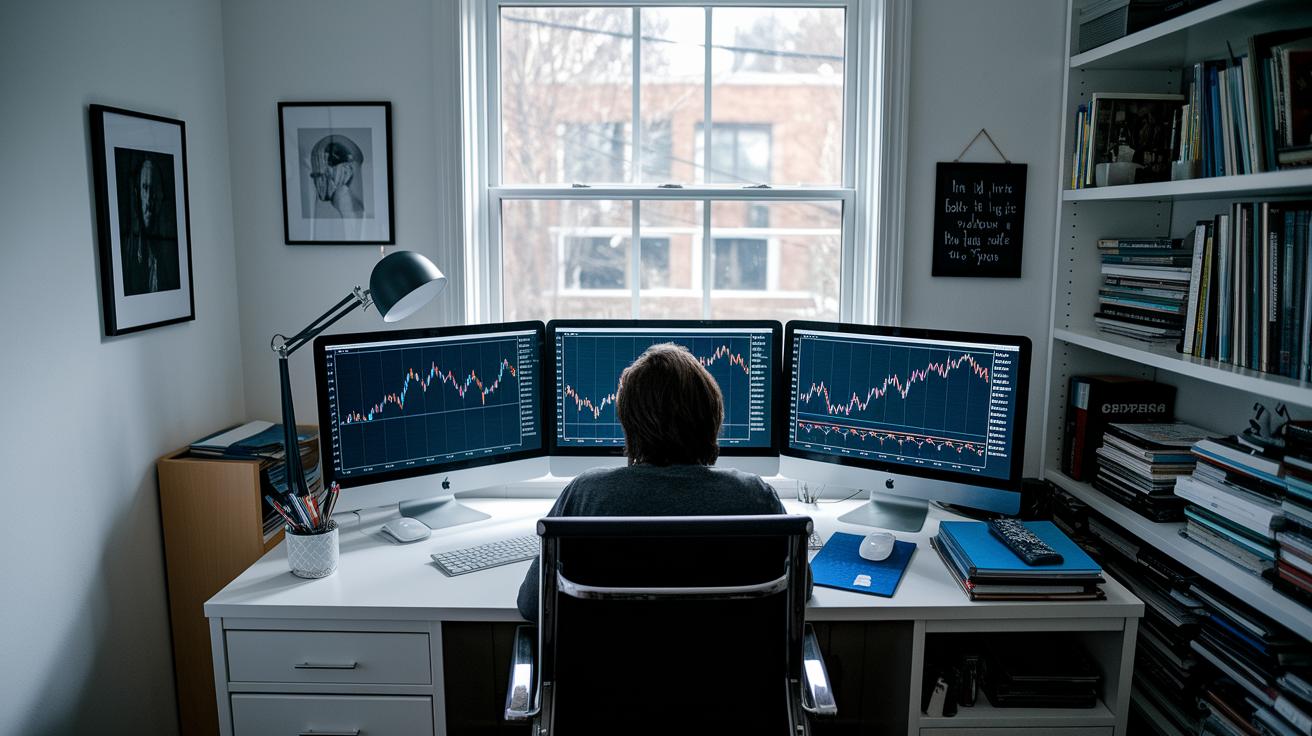
If you're curious about trying technical analysis without risking real money, free platforms are a fantastic starting point. They let you dip your toes into the world of market trends without any financial risk, think of it like testing a new recipe without worrying about wasted ingredients.
These free tools come with live data and demo accounts so you can practice and learn at your own pace. For example, TradingView lets you explore over 100 indicators, use Pine Script for backtesting, and even experiment with a paper-trading mode. It’s just like having a digital trading lab that mirrors real market conditions without any cash on the line.
Here are some top free tools:
- TradingView: Offers a wide range of over 100 indicators, backtesting using Pine Script, and a paper-trading mode for practice.
- MetaTrader 4/5: Comes with built-in oscillators and automated trading features that mimic real trades.
- Finviz: Features a free screener to highlight key chart patterns and RSI signals, making it easier to spot important trends.
- NinjaTrader: Provides an advanced simulation mode with detailed chart options to help refine your strategies.
These platforms give you a risk-free space to practice trading strategies, understand chart basics, and experiment with live-like market conditions. Give them a try, you might just find the perfect tool that enhances your trading skills!
Final Words
In the action, we mapped out technical analysis from its basic concepts to chart pattern insights and tried hands-on methods for tracking price movements. We touched on trading indicators, compared strategies for trading versus investing, and emphasized managing risks using solid techniques. Each section offers clear stakes in what is technical analysis, making complicated ideas easier to grasp. Keep your focus sharp and enjoy the process of refining your market strategies as you boost your portfolio's performance.
FAQ
Q: What is technical analysis?
A: The technical analysis method examines historical price and volume data to forecast future price movements based on core ideas that all information shows in price, trends persist, and patterns repeat.
Q: How does chart pattern analysis work?
A: Chart pattern analysis works by spotting recognizable shapes like head and shoulders, triangles, and rectangles on price charts, which signal potential trend reversals or continuations for more actionable trading decisions.
Q: What are common trading indicators in technical analysis?
A: Common trading indicators include moving averages (SMA and EMA), RSI for momentum, MACD for trend strength, Bollinger Bands for volatility, and OBV to assess buying and selling pressure.
Q: How is technical analysis used differently in trading versus investing?
A: Technical analysis in trading focuses on short-term charts and quick entries, while investing uses longer-term charts to assess overall trends, differing from fundamental analysis that focuses on financial statements and economic data.
Q: How can technical analysis aid in risk management and strategy development?
A: Technical analysis supports risk management by identifying entry and exit points, suggesting stop-loss placements, and setting risk/reward targets, which help build structured strategies for trading effectively.
Q: What advanced techniques are incorporated in technical analysis?
A: Advanced methods like multi-time frame analysis, Fibonacci retracements, Elliott Wave theory, and harmonic patterns add depth to basic techniques, giving professionals a detailed view of market behavior.
Q: What free software tools support technical analysis for beginners?
A: Free platforms such as TradingView, MetaTrader, Finviz, and NinjaTrader offer real-time charting, backtesting, and paper trading modes, allowing users to practice technical analysis without financial risk.