

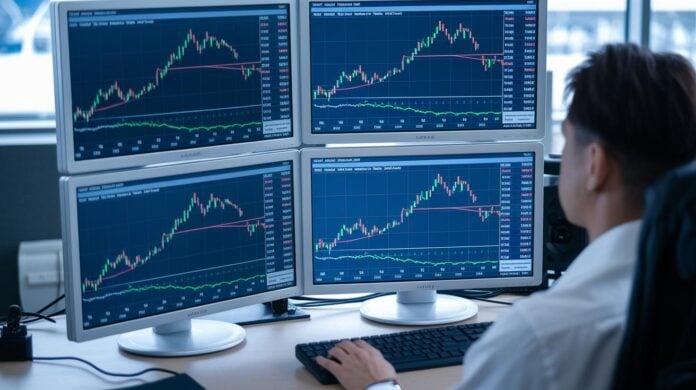
Have you ever thought that reading charts might be the key to quick wins in trading? Day trading technical analysis might sound like guesswork, but it actually leans on real info like prices, how much has been traded, and the overall mood of the market. Imagine it like watching a thrilling race, where every moment counts. When you spot the right setups and act quickly, it boosts your confidence for those split-second decisions. In this post, we'll talk about using clear market signals to steer your trades, giving you a smart edge in today’s fast-moving trading world.
Essential Day Trading Technical Analysis Strategies for Intraday Success

Day trading is all about quick moves. Traders buy and sell within the same day, sometimes holding positions for mere minutes or a few hours. They use technical analysis that looks at past prices, trading volumes (how many units are traded), and overall market mood to guess where prices may go next. Often, this method works hand in hand with watching price action, helping traders get ready for a day filled with little price bumps and dips.
Mixing price, volume, and market sentiment is key. Price tells you how the market is acting at a glance, while volume shows whether many people are trading. And sentiment gives that extra hint on whether traders are feeling excited or cautious. Imagine a situation where the price suddenly breaks out after a burst of high volume, this could be a clear hint to either enter or close a trade. Keeping an eye on these cues and timing your trades well can make a big difference.
In day trading, speed and accuracy are your best friends. Every second matters when you're reading fast-moving signals. Quick thinking and the ability to act as soon as you spot a clue from your technical analysis can help you keep pace with the market's rhythm. Smart setups and well-timed entries and exits might just be the edge you need in a volatile trading day.
Chart Patterns & Candlestick Interpretations in Day Trading Technical Analysis

Chart patterns and candlestick readings are like a friendly guide to help you understand how prices move during the day. Candlestick charts use different colors to show small shifts in trends, green or white usually means prices are on the up, while red or black suggests they’re coming down. Bar charts, in contrast, give you a clear peek at the opening and closing prices. Together, these visuals help traders catch the right moments for quick moves.
When you start spotting familiar patterns, it can really boost your confidence about entering a trade during the day. Here are five common patterns many traders watch for:
- Triangles: These show that prices are taking a breather and might soon break out.
- Flags: Think of these as short breaks in an ongoing trend.
- Head-and-Shoulders: This pattern often hints that a price reversal could be coming.
- Double tops/bottoms: When you see these, it might mean the trend is running out of steam.
- Channels: These mark clear levels where the price tends to bounce, like support and resistance lines.
Using these patterns to trigger breakout strategies lets you know when to dive into a trade as prices move out of their usual range. Spotting these signals early can really speed up your decision-making in a fast-changing market.
Momentum Indicators & Oscillators for Day Trading Technical Analysis

Oscillators play a key role in day trading by helping you quickly spot when the market is stretching to its limits. They keep an eye on how prices move and change over time, guiding you on when to jump in or step back from a trade. These tools base their signals on past price moves and trading volumes, giving you a live sense of market momentum.
- RSI: It measures how fast and how much prices are changing. When the reading is over 70, the market might be too high (overbought), and if it drops below 30, it could be too low (oversold).
- MACD: This indicator watches for changes by tracking when prices cross the zero line, hinting at new trends.
- ADI: It shows the strength of a trend. When it sits above 25, you’ve likely got a strong trend, but if it falls below 20, the trend might be weak.
- Momentum Oscillator: It calculates how quickly the price is moving, helping you confirm that a trend is really on track.
- OBV: This one uses volume numbers to signal if a trend is steady, looking for patterns like rising peaks or dropping lows.
Mixing these tools can really sharpen your strategy, whether you’re betting on the market bouncing back to its average or riding a clear trend. When you check multiple signals together, you get a clearer picture, which helps cut down on uncertainty during those fast-paced trading moments. This not only helps you time your entries and exits better but also makes managing risk simpler, boosting your overall trading confidence.
Moving Averages, Pivot Points & Trend Evaluation in Day Trading Technical Analysis

Moving averages smooth out the jagged ups and downs in prices, making it easier to see the big picture during a busy trading day. We often use simple moving averages, which average out past prices, to get a broad look at the trend. But exponential moving averages (EMAs) react faster to recent changes, almost like watching the live pulse of market data where new moves quickly stand out. These tools give you a steady curve that shows whether the market is rising, falling, or moving sideways, helping you make quicker, smarter choices.
Pivot points are another handy tool. They use the previous day’s prices to mark potential support and resistance levels on your intraday charts. These markers act like signposts where the price might hesitate or even turn around, guiding you on when to jump into or exit a trade. In essence, using pivot points together with moving averages helps paint a clearer picture of the market’s rhythm during the day.
Volume & Volatility Considerations in Day Trading Technical Analysis

High trading volume is a huge help for day traders because it makes it easier to buy and sell quickly. When lots of shares or units change hands, price moves tend to be stronger and stick around longer. Think of it like a steady heartbeat, constant volume can signal a dependable trend. For example, if you see a sudden jump in volume right when the price breaks out of a flat period, that could be a strong hint to act.
Volatility, or how much prices jump around, is another big piece of the puzzle. It guides traders on how to manage risk by setting stop-loss points and deciding how large a position to take. Sometimes, prices take wild swings outside their usual range. When that happens, it might mean a breakout is starting or the market is getting unpredictable. So, you might want to tighten your stop losses or even scale back your position. Imagine a stock that usually moves by a few cents suddenly jumping several cents, it’s a clear signal to rethink your risk.
Putting volume and volatility together can really sharpen your day trading strategy. When you see a spike in volume along with price swings that go beyond the norm, it’s a hint that a trade opportunity might be brewing. Merging these clues gives you a solid way to spot quick moves and keep your risk in check.
Risk Management, Entry/Exit Tactics & Backtesting in Day Trading Technical Analysis

Risk management is really the heart of smart day trading. It helps you keep your money safe and limits how much you can lose when the market moves fast. With studies showing that 71% of retail traders lose money trading CFDs, having a rock-solid risk plan isn’t just smart, it’s key to staying in the game. Starting off with a clear, disciplined approach can turn a rough day into a win.
Using stop-loss orders and a risk-reward ratio of at least 1:2 are everyday tools that work like a safety net. A stop-loss order automatically sells your position if losses get too high, protecting you from bigger drops. And when you look at your risk-reward ratio, you make sure that the possible gains are worth the risk you’re taking. It’s a bit like having a safety belt when riding a roller coaster in a wild market ride.
Backtesting is another crucial piece of the puzzle. By using historical price data, you can simulate past market conditions to see if your strategy might work in real time. Think of it like trying out a recipe before cooking a big dinner. Modern digital platforms make this process easier with automated tools that scan past market data. This lets you quickly spot the strengths and weaknesses in your approach.
Today’s trading platforms are always improving their tools for tracking performance and analyzing risks. This means you can adjust your entry and exit points based on the freshest data. With these tools, you’re not just guessing, you’re making choices backed by real, live market insights.
Final Words
In the action, we explored how day trading technical analysis sets up solid intraday strategies. We looked at price action methodology, candlestick insights, and momentum indicators that guide swift decisions.
We broke down moving averages, pivot points, volume dynamics, and risk management like setting stop-loss orders and backtesting techniques. Each element works together to help you find entry and exit opportunities.
Stay positive and keep refining your approach, there’s always more to learn in day trading technical analysis.
FAQ
What is a day trading technical analysis PDF or book and are there free downloads available?
A day trading technical analysis PDF or book offers a concise guide on reading charts, spotting trends, and using key indicators. Free downloads serve as an accessible resource for intraday trading techniques.
What is a technical analysis example?
A technical analysis example shows how traders use charts and volume to identify price patterns, helping them decide when to enter or exit a trade during the day.
What are the best technical indicators for day trading?
The best technical indicators for day trading include tools like RSI, MACD, moving averages, and OBV. These indicators help confirm trends and guide timely trade decisions.
Do technical analysis work on day trading?
Technical analysis works on day trading by using multiple signals, such as price action and volume trends, to quickly identify opportunities and manage risks throughout the trading day.
What is the 1% rule for day trading?
The 1% rule for day trading advises limiting risk to only 1% of your total capital on any trade, helping protect your account from severe losses.
What is the best technical analysis method for day trading?
The best technical analysis method for day trading combines chart patterns, momentum indicators, and volume studies, giving traders a holistic view to make fast, informed decisions.
Why is $25,000 required to day trade?
The $25,000 minimum for day trading is set by regulators for pattern day traders. It helps ensure traders have enough funding to cover potential losses and meet margin requirements.