


Have you ever wondered if quick decisions on stocks could lead to big wins? Day trading is a bit like riding a roller coaster, every twist might bring a chance for profit. Today’s market moves fast, and traders use smart tools to catch those short bursts of opportunity, much like a dancer catching the beat of a favorite song.
This article explains how rapid buying and selling works and why so many people dive into quick trades to grab small, speedy gains. It’s all about turning everyday stocks into exciting possibilities with just a few bold moves.
How Day Trading Stocks Works in Today’s Market
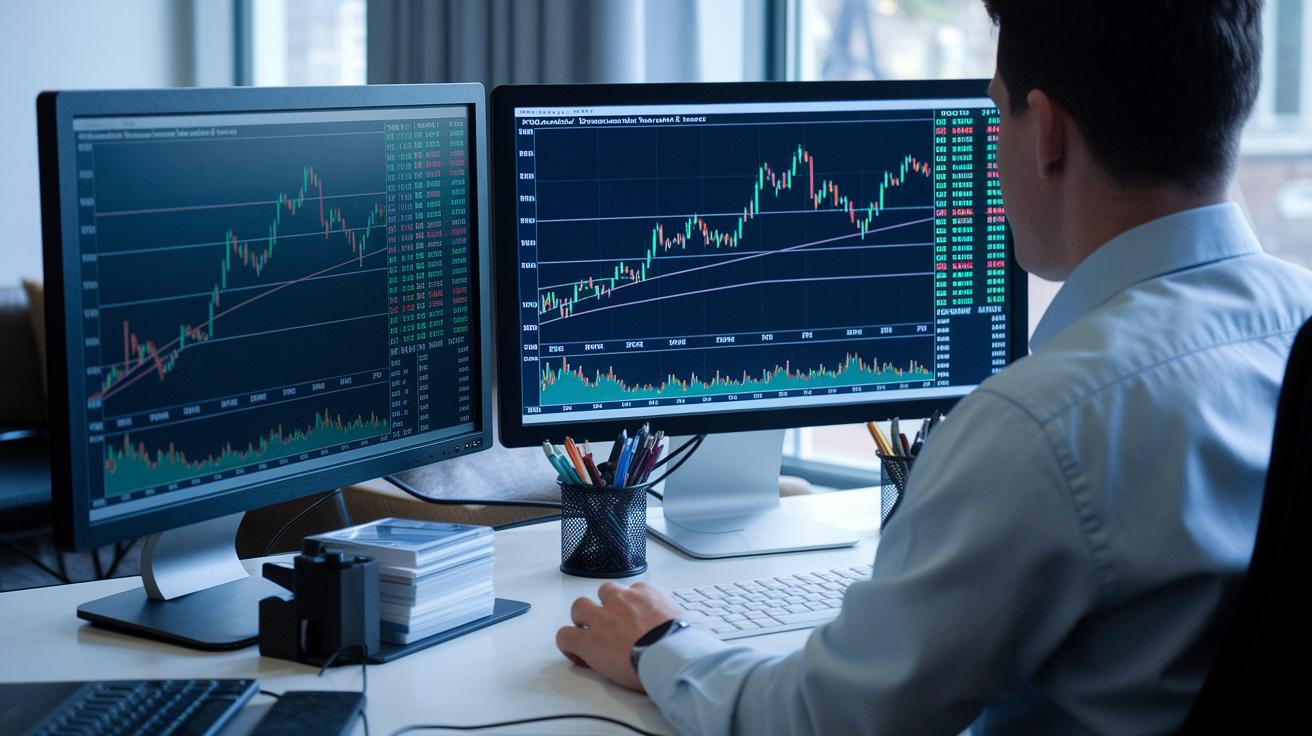
Day trading is like a fast-paced dance with the stock market, where you buy and sell stocks within just one day. You might hold a stock for only a few minutes or a couple of hours, but never overnight. The idea is to catch small price changes in stocks that see a lot of action with millions of shares traded daily. It’s pretty surprising how many traders lean on technical tools to find those moments that can turn into quick wins.
Tools like moving averages help spot short-term trends, while the RSI tells you when a stock might be overbought or oversold (basically, when it’s become too expensive or too cheap). Bollinger Bands, on the other hand, hint at bursts of high or low volatility. Together, these tools help traders nail down the best times to trade, especially when a stock shows high activity, sometimes even double its usual volume.
Real-time news and market events are a key part of the game, too. Imagine a surprise earnings report that sends stock prices flying, those moments can really shake things up. That’s why staying on top of the news is absolutely essential when you’re trading quickly.
What sets day trading apart from strategies like swing trading or long-term investing is the need to act fast. Decisions are made in the blink of an eye, much like riding a roller coaster where every twist counts. If you’re curious to dive in, there are plenty of beginner guides that break down the basics. It really is about making quick decisions and capitalizing on even the smallest market moves.
Top Day Trading Stocks by Liquidity and Volatility

Day trading is all about catching those quick moves, so you need stocks that change fast and trade smoothly. When you're picking stocks for rapid trades, try to choose ones with millions of shares swapping hands each day. This high trading volume makes it easier to get in and out without waiting too long. If a stock swings more than 2% during the day, it might give you the quick up and down action needed to snag small profits several times.
Another thing to watch is the public float. Think of it as a measure of how much the trading price might jump or dip with each trade. A lower float can mean quicker, sharper moves, though it can also be riskier. Consider it like picking the best ingredients for a meal, finding the right mix of liquidity (how fast you can buy or sell shares) and volatility (the price movement) can really smooth out your trading experience.
The table below shows some top examples based on market cap, average daily volume, and typical intraday moves. These stocks are known for their quick shifts and high trading volume, making them strong choices for day trading.
| Stock | Market Cap (Summer 2023) | Avg Daily Volume | Intraday Volatility |
|---|---|---|---|
| Apple (AAPL) | ≈$3 trillion | 60 million shares | 1–3% |
| AMD (AMD) | ≈$150 billion | 70 million shares | 2–4% |
| NVIDIA (NVDA) | ≈$1 trillion | 80 million shares | 3–5% |
| JPMorgan Chase (JPM) | ≈$450 billion | 20 million shares | 1–2% |
| Bank of America (BAC) | ≈$300 billion | 60 million shares | 1–2% |
| META Platforms (META) | ≈$600 billion | 25 million shares | 2–3% |
Day Trading Stocks Strategies: Scalping, Momentum, Breakouts

Scalping is a fast, focused way to earn small profits in just minutes. Picture it like grabbing a quick snack, entering and leaving trades quickly to collect little gains that add up over time. With this method, traders lean on high trading volume and tight stop-loss levels (that’s a rule to automatically sell if a stock’s price falls too much) to keep risks low. One trader might jump in when a stock shows a slight uptick and then exit moments later, pocketing a tiny percentage gain. It all comes down to perfect timing and constant attention, so your setup needs to be strong and ready for split-second moves.
Momentum trading works a bit differently. This approach focuses on stocks that suddenly show a strong surge in volume, think about a stock trading at least twice its usual rate, often sparked by news or market buzz. It’s like catching a wave; you ride that rising tide until you sense a slowdown. Successful momentum traders scan for sharp volume spikes and watch how the price moves closely. When the trend starts to falter, it signals that it might be time to exit the trade.
Breakout trading homes in on stocks that move past key resistance levels, confirmed by a noticeable spike in volume. Imagine it like breaking through the finish line; if a stock jumps past an important barrier and stays above it, that’s a potential breakout. However, if it quickly retraces back, it could be a false signal. To avoid this pitfall, traders often wait for strong, sustained volume before making a move. Unlike swing trading, which might hold stocks overnight, breakout strategies require closing out positions by the end of the trading day. This ensures that you steer clear of unexpected overnight market shifts while keeping your emotions in check.
Technical Analysis Tools for Intraday Stock Traders

Technical analysis is like the lifeline for fast trades. It sends clear signals that tell you when to jump into or out of a position. For example, a moving average crossover acts like a green light. When the 5-period moving average moves above the 20-period moving average, it's a signal that the trend is shifting, kind of like a runner speeding up at the final stretch.
Next, the RSI helps you figure out if a stock is too pricey or too cheap in a short period. When the RSI goes above 70, it hints that the stock might be overbought, so it might be a good time to hold off or exit. On the flip side, if it drops below 30, it could be a chance to buy. Think of the RSI as a speedometer that shows whether the price is revving up or slowing down.
Bollinger Bands give you another layer of insight. They highlight moments when stocks get trapped in a narrow price range before making a big move. It’s like feeling the calm before a sudden storm. And then there’s MACD divergence. When the price and momentum disagree, it tells you that the trend might be losing steam, suggesting a quick reversal could be coming.
Fibonacci retracement levels are also useful. They mark key zones where prices tend to bounce back, helping you pinpoint a smart entry point. When you combine these tools, they form a dynamic picture of market behavior that can guide you through quick decisions.
| Indicator | Use Case | Setup | Timeframe |
|---|---|---|---|
| Moving Average Crossover | Trend confirmation | MA5 > MA20 | 5–15 min |
| RSI | Overbought/Oversold entry | RSI > 70 or < 30 | 5–15 min |
| Bollinger Bands | Volatility breakout | Band squeeze | 5–15 min |
| MACD Divergence | Momentum shift | MACD vs price | 5–15 min |
| Fibonacci Retracement | Pullback entry | 38.2%–61.8% | 5–15 min |
Managing Risk and Position Sizing in Day Trading Stocks
Day trading is a bit like navigating a fast-moving river, you need to manage your risks and size your positions carefully to avoid wiping out. Many traders set a stop-loss order before they even hit "buy." This order automatically pulls you out of a bad trade, so you’re not stuck watching losses grow while you second-guess your decisions.
Traders usually risk just a small portion of their total money, often just 1–2% per trade. That way, one misstep won't really shake up the whole portfolio. It’s like keeping a little backup for those unpredictable market turns.
Another smart move is using a risk-reward ratio of at least 1:2. In plain terms, for every dollar you risk, you aim to earn at least two dollars back. This strategy helps balance out any losses and keeps your overall profits growing, even when the market gets bumpy.
Don’t forget to factor in the costs of trading. Things like commissions, slippage (the difference between expected and actual trade prices), and short-term capital gains taxes can sneak up on you. Even small fees, over many trades, can chip away at your profits, so it’s important to plan for them.
Many traders also run simulated backtests or look back at historical data to fine-tune their risk controls. For those diving deep, risk assessment models can offer extra insights. By combining these techniques and sticking to fixed percentages of your capital, you can safeguard your funds while still chasing those profitable trades. Ultimately, careful planning is the name of the game for long-term success.
Choosing the Best Platforms and Tools for Day Trading Stocks

Choosing the right trading platform is super important when you're making quick moves in a fast market. Many traders trust CapTrader’s platform because it’s highly rated and free on both the AppStore and Google Play. This means you can easily trade on your phone anytime, anywhere. Mobile apps provide live quotes, multiple order types, and real-time level II market data, all of which help you act in the blink of an eye.
Real-time scanners, like the ones on TradingView, are great at spotting top movers before and during the trading day. Have you ever felt that surge of excitement when you spot a hot opportunity? When you’re comparing brokerage platforms, it’s smart to consider factors like trade execution speed, the freshness of data feeds, and the variety of technical tools offered. Some apps even let you set up personalized alerts and have customizable charts that can really help you catch quick gains.
Commission fees can vary a lot from one broker to another, and if you’re trading frequently, a zero-commission option can really lower your costs. It might help to read detailed platform reviews on a best day trading platform page to understand these nuances. A free portfolio analysis tool that offers market scanning and in-depth analysis can also refine your trading strategy. When you mix all these features together, you create a robust setup that supports rapid decision-making and keeps your trading process efficient.
Final Words
In the action, we explored how day trading stocks works today through clear, step-by-step insights. We broke down selecting high-liquidity stocks, using tools like moving averages and RSI, and managing risks with fixed stop-loss orders. We also shared top strategies, from scalping to momentum plays, while comparing trading platforms and tools. Each section aimed to guide you toward confident market moves. Embrace these insights and watch your trading decisions sharpen as you put these techniques into practice with day trading stocks.
FAQ
Day trading stocks reddit
The day trading stocks reddit discussions highlight real traders sharing experiences, strategies, and insights on intraday opportunities using informal online communities to better understand fast-moving stock trades.
Best day trading stocks today
The best day trading stocks today are defined by high liquidity and volatility, making them attractive for quick trades. Traders look for stocks with high volume and clear technical signals during the trading session.
Top 10 best day trading stocks today
The top 10 best day trading stocks today typically include names with strong market activity, high liquidity, and significant intraday moves. These stocks allow for rapid entries and exits to optimize short-term profit potential.
Best stocks for day trading for beginners
The best stocks for day trading for beginners are those with high liquidity and moderate volatility. These stocks have clear technical patterns and lower risks, making them ideal as you build your trading skills.
Day trading stocks to buy Tomorrow
Day trading stocks to buy tomorrow are selected based on upcoming market catalysts, overnight news, and pre-market trends. Traders use these insights to plan trades with stocks poised for notable intraday movement.
Day trading stocks to buy
Day trading stocks to buy are chosen by evaluating real-time volume, volatility, and technical setups. Traders target stocks with consistent trading patterns that promise quick profit ticks within a single trading day.
Day trading stocks for beginners
Day trading stocks for beginners focus on simplicity and reliability. Many starting traders use basic technical tools like moving averages and RSI to find trades, ensuring they learn fundamental market behaviors without excessive complexity.
Best day trading stocks
The best day trading stocks feature high liquidity, strong volume, and notable intraday price shifts. These stocks support rapid buying and selling, which is crucial for capturing small but frequent gains in fast-moving markets.
Which stock is best for day trading?
Which stock is best for day trading is determined by its liquidity, volume, and technical clarity. Popular picks like Apple (AAPL) or NVIDIA (NVDA) often lead the list due to their consistent market activity and predictable patterns.
Can you make $1000 a day trading stocks?
It is possible, but reaching that level depends on your strategy, skills, market conditions, and risk management practices, making consistent daily profits challenging.
Is $100 enough to day trade?
Trading with $100 is possible, yet limited capital restricts profit potential and amplifies the impact of fees. A larger account is generally more effective for meaningful returns.
Why do you need $25,000 to be a day trader?
U.S. regulations require this minimum for pattern day trading accounts to buffer risks and cover potential losses, ensuring traders have sufficient capital to meet market demands.