


Ever thought day trading options might boost your finances in just a few minutes? Each options contract covers 100 shares, so every second can matter when catching sudden market jumps or drops. Strategies like straddles and spreads help you handle different market moves while keeping risks low. Good timing and smart planning turn every minute into an opportunity to earn. In this post, you'll see how well-planned trades can quickly turn market shifts into rewards. Ready to see how quick, sharp moves can lead to fast profits?
day trading options: Bold Moves for Quick Profit
When you trade options, you’re buying or selling contracts that give you control of 100 shares in one go. It’s like stepping up your game in just one session. Ever heard that a single straddle, buying both a call and a put at the same strike and expiration, lets you earn from both rising and falling markets? Quick timing is everything here because even a tiny delay can shift your profit potential.
In intraday trading, watching real-time charts closely is key. You need to mix basics like call and put strategies smartly. For example, if you’re expecting wild price swings before an economic report, try a straddle to cover all bases. Or, set up an iron condor to balance long and short positions and help keep risks in check during those fast moves.
Here’s a simple step-by-step tactic:
- Look out for big news moments or clear technical breakouts.
- Pick options with enough time left until expiration so that time decay (how fast an option loses value as it nears expiring) doesn’t hit you too hard.
- Use a spread setup to cut down on risk if the market unexpectedly turns.
Remember, every options contract puts you right in the mix of the market. Techniques like vertical spreads let you control risk while using leverage. Make sure your entries match clear contract details, and keep an eye on the option Greeks (that’s just a fancy way to say how quickly option prices can change). Trust the market’s pulse, and you might just turn quick swings into profit.
Platforms and Tools for Seamless Day Trading Options

When you're on the hunt for quick profits, a dependable trading platform becomes your best buddy. Reliable systems deliver the swift pulse of real-time data, simple-to-read charts, and super-fast feeds that make trading feel almost magical. Platforms like Thinkorswim let you test ideas in a safe simulation, so you can learn without risking a single dollar. Many top online platforms come with robust desktop applications loaded with sharp, clear charts, and their mobile versions are crafted to keep up with you wherever you go.
It’s smart to dig into fee details and commission structures because even small savings per trade can pile up when you’re making lots of quick moves. Robinhood’s advice on trading rules reminds you to consider limits and regulations that affect your overall cost. Plus, direct market access can speed up the process between placing your order and seeing it executed. Comparing free and paid data options helps you snag that perfect balance of cost and performance.
One trader even slashed his monthly expenses by moving to a platform with transparent commission details that matched his need for speed.
| Feature | Platform Benefit |
|---|---|
| Real-time Data | Get instant updates during rapid market moves |
| Fee Structure | Lower fees boost your profits trade by trade |
Risk Controls and Pattern Day Trader Rules in Options Sessions
When you're making quick moves in options, it's key to know the day trading rules. For example, FINRA's PDT rule means if you do four or more day trades in five business days, your account needs at least $25,000. This rule is there to help you avoid unexpected, big losses.
Imagine your trades as slices of a pie. When you set up a vertical or credit spread to limit how much you can lose, think of each spread as a slice that keeps your risk in check. Keeping your loss to just 1–2% of your account each day can really make a difference. I once set a firm loss limit so that even if one trade went wrong, it wouldn’t derail my overall strategy.
Also, pay attention to the bid/ask spreads and liquidity, which is how fast you can trade an asset. In fast markets, if there isn’t enough liquidity, you can lose money due to slippage. Try to spread your strikes and expiration dates, adjust your lot sizes, and manage that tail-risk so a sudden market move doesn’t wipe out your gains.
Finally, think carefully about whether to use a cash or margin account. Cash accounts steer clear of the PDT rule but limit your leverage, while margin accounts offer more flexibility but come with extra rules. Smart portfolio management during each session keeps you in control and ready for anything.
Technical Setups and Indicators Tailored to Intraday Options
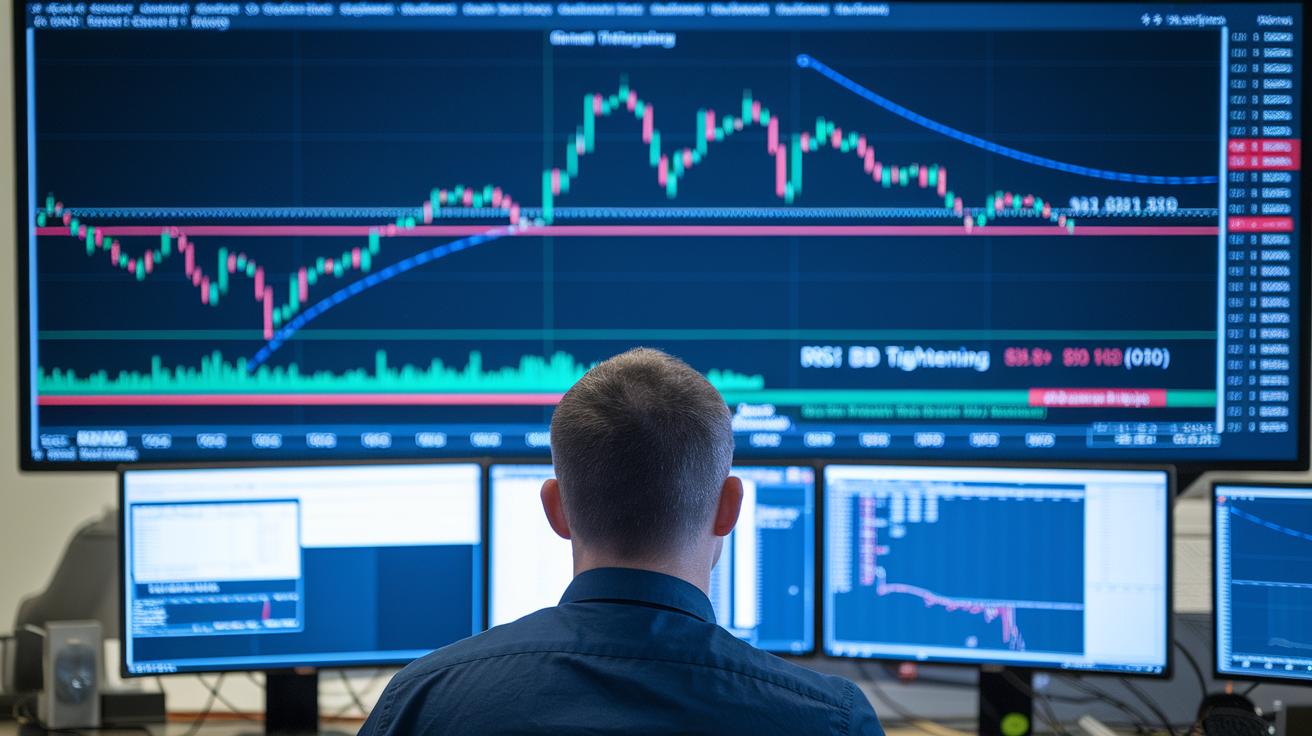
Chart patterns can be your fast ticket to making smart decisions. Start by checking the RSI (14-period) to see if a contract might be too expensive or too cheap. When the RSI falls below 30, it could signal a bounce back, like spotting a burst of green when everything else looks red. Next, look at the 9/21 EMA cross. When these moving averages meet, it might be the perfect moment to jump in or dial back.
Bollinger Bands (20,2) give you another clear snapshot by showing when volatility tightens up. When the bands contract, think of it as a hint that a breakout might be brewing. Trade carefully during sudden spikes in implied volatility since option premiums can shift in the blink of an eye. If you spot a clear market trend using both the RSI and moving averages, vertical spreads are a smart play. They let you ride the trend while keeping your risk in check.
In times when the market seems to be moving sideways, the iron condor technique can be a real asset. It helps you profit from lower volatility levels. And don’t forget to keep an eye on the economic calendar. Key announcements like earnings reports can stir up rapid changes in premiums, so stay ready to act fast.
Key checkpoints:
- Use RSI for spotting overbought or oversold conditions.
- Look for a 9/21 EMA cross to time your trades.
- Watch Bollinger Bands for signs of shrinking volatility.
- Consider vertical spreads when a clear trend is in place.
- Use iron condors in neutral or low-volatility sessions.
Together, these strategies offer a solid toolbox to catch quick price shifts and set well-timed entry and exit points.
Precision Order Execution, Position Sizing, and Profit Targets
When you start a trade, lock in your chosen entry price using limit orders. That means you pick a set price to buy or sell, which helps you avoid sudden jumps in price. For example, if you set a limit order saying "I'll buy at $50 per share," you're giving yourself a clear target to hit. And don’t forget to stagger your stop-loss orders to lessen the chance of slippage and protect your position if the price turns unexpectedly.
Next, set profit targets by picking a specific gain, say, aiming for a return of 30-50%. This lets you plan when to exit a good trade. To keep your risk in check, calculate your breakeven point using the formula: strike ± premium paid. This ensures you only jump in when the trade has a risk-reward ratio of at least 1.5:1, giving you a smart guideline on how much the trade needs to move to become worthwhile.
As the market moves in your favor, scale out of your positions gradually. Keep a close eye on the volume of contracts to see that your orders are filling as you expected. Here are some handy tips:
- Use limit orders for clear entry points.
- Place staggered stop-loss orders for smoother exits.
- Gradually scale positions to capture gains while keeping your account safe.
| Strategy | Action |
|---|---|
| Limit Orders | Lock in your entry price |
| Stop-Loss Orders | Place staggered stops to reduce slippage |
| Profit Targets | Set clear gains (e.g., +30-50%) for exits |
Psychological Discipline and Trade Journaling for Options Day Traders

Day trading can really wear you out. When you're tired, you might find yourself trading too much or making quick, impulsive choices without thinking. Keeping a trade journal is like taking a clear picture of both the market and your state of mind. Write down when you start and finish a trade, whether you made money or lost it, the reasons behind your choices, and even how you felt along the way. For example, you might record, "Entered a call spread at 10:15 AM when the market was jittery, felt a mix of anticipation and caution."
Reviewing your records each day can help you see which strategies work best for you. Look at your profit or loss, win rate, and average returns to understand your trading patterns. Here are a few simple practices to get you started:
- Keep clear and detailed logs of every decision.
- Track key numbers like profit, win rate, and average returns to spot trends.
- Limit the number of trades you make each session so you don’t get overwhelmed.
- Take regular breaks to clear your head and avoid letting emotions take control.
By making it a habit to review your journal, you'll gain a mental edge that can help you improve your trading over time. This steady, careful approach not only refines your strategy but also helps keep your emotions in check during those fast, in-session moves.
Simulations, Paper Trading, and Ongoing Education for Day Trading Options
Start off with paper trading. Spend 2–4 weeks trying out your strategies without risking real money. Think of it like testing a new recipe before you serve it to excited guests, you want to be sure every step works perfectly. For example, try a straddle setup on historical intraday data to see if your win rate improves; it’s like rehearsing a play before the live show.
Then, make good use of simulators to backtest your spreads and straddle setups. Desktop platforms like thinkorswim and TradingView offer reliable simulation environments that can sometimes outperform web or mobile demos in both speed and reliability. Testing your ideas here gives you real insights into how quickly trades execute and how responsive the platform is.
Next, dive into interactive tutorials and virtual classes. These step-by-step guides help break down complex topics such as premium pricing and option Greeks (terms that explain how different factors affect an option’s price). And by attending webinars or virtual workshops, you get to ask questions directly and fine-tune your strategy alongside experienced traders.
Key practices to keep in mind:
| Practice | Description |
|---|---|
| Desktop Simulations | Test your strategies to check for speed and consistency. |
| Historical Backtesting | Examine past data to see how different setups would have performed. |
| Virtual Workshops | Join live sessions to learn rapid-trade routines and ask questions. |
Embracing these educational tools builds your confidence. It’s like drawing a clear map before starting an exciting trading journey, helping you feel ready for the fast-paced world of day trading options.
Final Words
In the action, we broke down powerful tactics for day trading options. We covered rapid-entry strategies, precise order execution, and key risk controls to help you stay alert in fast markets. We also looked at the tech tools and mental discipline needed to keep your strategy sharp. By testing methods in simulations and staying informed on market trends, you’re ready to build a confident, agile approach. Keep refining your approach and celebrate each win along the way.
FAQ
Day Trading Options book
A Day Trading Options book explains quick-execution strategies and effective setups designed for fast-paced trades. It offers clear guidance and practical insights to help traders make swift, informed decisions.
Day trading options reddit
Day trading options discussions on Reddit bring real trader experiences, community advice, and practical examples. They help traders learn tactics, share tips, and understand common challenges in fast-paced options markets.
Day trading options for beginners
Day trading options for beginners means learning clear entry and exit strategies with manageable risk controls. Beginners are encouraged to use simulations and simple setups while building confidence through practical, small-scale trades.
Best day trading options
The best day trading options feature high liquidity, fast execution, and transparent technical setups. They enable traders to catch quick gains while managing risk effectively through defined stop-losses and profit targets.
Day trading options rules
Day trading options rules cover adherence to platform guidelines, commission structures, and risk management measures. These rules emphasize maintaining set loss limits and ensuring sufficient account balance for rapid and frequent trades.
Day trading options on Robinhood
Day trading options on Robinhood involves using its user-friendly mobile interface to execute quick trades. Traders need to understand commission details and order types to handle rapid market shifts successfully.
Day Trading Options – youtube
Day Trading Options on YouTube features video tutorials and live examples that break down setups, strategies, and platform reviews. These videos offer visual and practical insights for traders improving their technique.
Day trading options taxes
Day trading options taxes focus on how profits and losses are reported. Traders must keep accurate records, as frequent trading has unique tax implications compared to long-term investments, making proper documentation essential.
Is it possible to day trade options?
It is possible to day trade options by opening and closing positions within the same session. This approach leverages short-term price movements and requires strict risk management and rapid decision-making.
How much can you make day trading with $1000?
How much you can make day trading with $1000 depends on market conditions, individual skill, and strict risk management. While modest gains are possible, the inherent volatility means profit levels can vary significantly.
What is the 3 5 7 rule in trading?
The 3 5 7 rule in trading represents a guideline for reviewing performance over specific trade counts. It encourages traders to evaluate their entry, exit, and strategy adjustments after 3, 5, or 7 trades to refine their approach.
Do you need 25k to day trade options?
The $25k minimum usually applies to pattern day trading rules. While options trading can be done with less, traders must be mindful of regulatory guidelines if executing frequent day trades within a short timeframe.