


Ever thought day trading on Fidelity might be easier than you imagine? Imagine setting up your account as simply as filling up your car for a quick drive. It’s not just for seasoned pros, smart planning and knowing the right steps can help anyone dive in.
We’ll walk you through picking the right account and following key trading rules, making the whole process feel less stressful. It’s like setting the perfect pit stop on your way to a big race. So why not give it a try and see if day trading on Fidelity is your next exciting move?
Setting Up Your Fidelity Account for Day Trading
Start by opening your Fidelity account. You can choose a cash account, where trades wait until funds settle in two days, or a margin account that lets you use funds right away. Think of it like this: a margin account is like having your race car fueled and ready at the starting line.
Keep in mind the Pattern Day Trader rule. If you make four or more day trades in five days, you must have at least $25,000 in your account. This rule is there to help you manage risk and make sure you don’t overdo it with your funds.
Before trading, you need to verify your identity and link your bank account to follow federal rules. Your buying power depends on whether your funds have cleared. With a margin account, you might have extra power for quick trades, while a cash account could mean waiting until the money is available.
Here’s how you can get started:
- Open the type of brokerage account that suits your style.
- Link your bank account and add funds.
- Complete the identity verification.
- Make sure your buying power matches your trading plan.
Following these steps will help you set up your Fidelity account for day trading quickly and clearly.
Navigating Fidelity Platforms for Day Trading Success
Fidelity Active Trader Pro brings a host of features that day traders really count on. You can set up your own watch lists, use handy screeners, get real-time alerts, and even access Level 2 market data (which shows extra detail about trades). Trades execute in about 0.04 seconds on average, so you get in and out fast, even if the positions window takes a couple of seconds to catch up. Many day traders rely on split-second timing to secure gains, yet even a tiny lag can impact decisions.
The desktop platform is clear and easy to work with, even if you’re using a small window on a 4K monitor. Finding Level 2 data might take a bit of searching, so it helps to tailor your workspace. Arrange your favorite news feed right beside your live price charts to create a setup that feels natural.
Fidelity’s mobile app is built for flexibility. It lets you place orders outside regular trading hours, both before and after the market opens, and delivers live quotes with instant push notifications. This means you can keep a close eye on the market, even when you’re on the go.
Here’s what you get at a glance:
- Customizable watch lists and screeners
- Real-time alerts and detailed Level 2 market data
- Fast trade execution (around 0.04 seconds)
- Mobile support for pre-market and after-hours trading
Breaking Down Fees and Commissions for Day Trading on Fidelity

At Fidelity, you can trade stocks and ETFs without paying a commission. This means every time you buy or sell, you keep more of your money, a clear win for day traders.
But if you need extra help or use special order types, extra fees might jump in. For example, if you’re in a rush and ask a broker for assistance, you’ll see a service fee on your trade confirmation. That confirmation also explains details like price improvement (getting a better price) and routing information (the path your order took).
If you borrow funds with a margin account, you will be charged interest. This interest goes up with the amount you borrow and is set in tiers, so the more you borrow, the more you end up paying.
There are also additional fees for things like nonstandard withdrawals or expedited transfers. Think about the types of orders you make most often and try to use the fee-free options to keep your trading costs low.
Keep these in mind:
- Trading without commissions helps you keep more of your gains.
- Special orders and margin borrowing might add extra charges.
- Your trade confirmation shows all the important fee details.
Key Day Trading Tools and Strategies on Fidelity

Fidelity packs a friendly set of tools in Active Trader Pro that works well for both newcomers and seasoned day traders. It’s like having a smart helper by your side to make placing trades feel less intimidating and keeping risk in check. With neat features like live charts, screeners you can tweak, quick alerts, and watch lists, you’re set to catch market moves as they happen.
Here’s a quick rundown of the most popular trading tools on Fidelity:
- Advanced charting tools to see price trends clearly
- Customizable screeners for sorting stocks by your chosen rules
- Watch lists to keep tabs on the stocks you care about
- Order alerts that let you know when important price moves occur
Want to dive in? Here’s how you can place a day trade on Fidelity:
- Start by checking your watch list and using screeners to spot promising stocks.
- Look over the live charts and technical indicators (simple signals that show how a stock’s moving) to find trends.
- Set an order using a risk-control type like a stop-loss or limit order that fits your plan.
- Confirm your order on Active Trader Pro, making sure every detail matches your strategy.
- Keep an eye on the trade with real-time alerts and be ready to adjust if the market shifts.
Fidelity even offers a risk-free space to practice through its day trading simulator and paper trading options. This way, you can sharpen your skills without risking real money. Plus, built-in risk management tools like stop-loss orders and trend analysis help you stay disciplined and manage any surprises the market throws your way.
Compliance and Risk Management for Day Trading on Fidelity
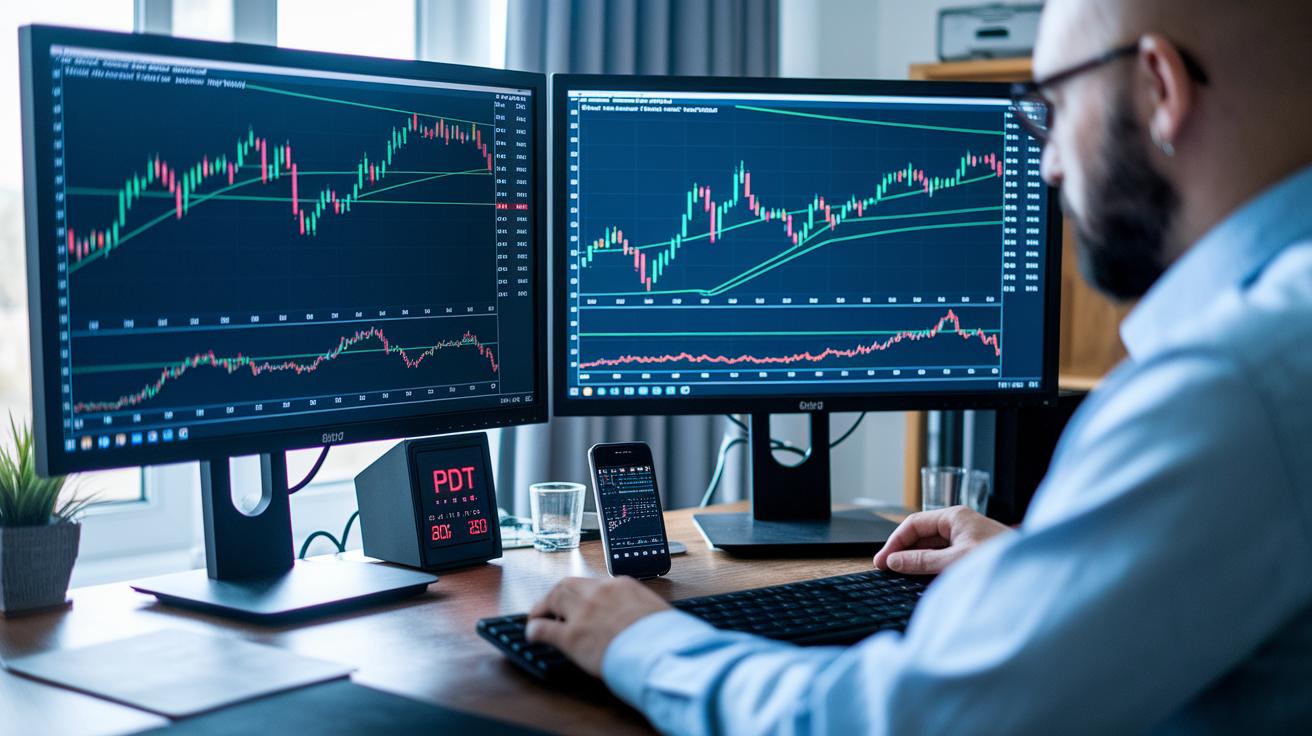
When you start day trading on Fidelity, one of the first rules to remember is the Pattern Day Trader rule. This rule says that if you make four or more day trades in a five-day period, you need to have at least $25,000 in your account. It uses a rolling counter, meaning it always looks back at your recent trades to help keep risky overtrading in check.
Fidelity makes tracking your trades easy with its trade counter tool. This nifty tool shows your intraday activity, so you always know how close you are to hitting that PDT limit.
There are two main account types on Fidelity, and each has its own rules about when you can use funds. With a margin account, you get instant buying power, letting you jump into trades quickly. On the other hand, if you have a cash account, you have to wait until a T+2 settlement is complete before reusing funds. That means when you sell something, you might have to hang on for a couple of days before reinvesting.
Another thing to keep an eye on is margin. Margin requirements change depending on how big your position is and the type of asset you’re trading. This matters because if a trade pushes your account too far, you might get a margin call, forcing you to sell assets to cover the required amount.
Best practices to help you stay on top of everything include:
| Tip | Why It Helps |
|---|---|
| Check settlement timelines | Keeps you aware of when funds are ready |
| Use the trade counter | Helps you stick to PDT rules |
| Review margin usage | Avoids surprises from margin calls |
By keeping these tips in mind and monitoring your trades, funds, and margin, you’ll be better prepared to manage risk as you navigate the day trading process. Happy trading!
Final Words
In the action, we covered every step to get started on Fidelity. We walked through setting up your account, navigating trading platforms, and breaking down fees, all while outlining key day trading on fidelity strategies. Each section provided clear, straightforward steps to empower you. You now have the basics to build confidence in managing trades, understanding market trends, and streamlining your portfolio. Keep learning and adapting, and remember that every market move builds your trading savvy. Enjoy the excitement and growth that comes with informed trading.
FAQ
How does day trading on Fidelity appear on Reddit and in reviews?
The discussion on Fidelity day trading in Reddit and reviews highlights positive platform performance, user-friendly tools, and strong customer support, though some traders note speed lags and interface quirks.
How do you start day trading on Fidelity?
Starting day trading on Fidelity means opening a brokerage account, verifying your identity, linking a bank account, and choosing the right account type—margin or cash—to meet federal trading requirements before placing trades.
What is considered day trading on Fidelity?
On Fidelity, day trading means executing four or more day trades within five business days in a margin account, which triggers the pattern day trader rule that requires a minimum of $25,000 in equity.
Can you day trade on Fidelity without $25K, and how often can you do it?
Without $25K in a margin account, you are limited to trading using a cash account, where you must wait for funds to settle (T+2), reducing the frequency of day trading to avoid triggering pattern day trader restrictions.
What are the best options for day trading on Fidelity?
The best options for day trading on Fidelity include using the Active Trader Pro platform, which offers real-time alerts, personalized watch lists, fast execution, and advanced charting tools to support effective trading strategies.
What are Fidelity’s day trading requirements?
Fidelity’s day trading requirements involve account verification, funding via bank transfer, choosing an appropriate account type, and meeting federal trading guidelines—especially the $25,000 equity rule for margin accounts used in frequent day trades.
What are Fidelity’s rules for day trading in a cash account?
With a cash account on Fidelity, day trading is limited by the T+2 settlement rule, meaning you must wait until recent trades settle before reinvesting funds, reducing trading frequency and the risk of free riding.
Is Fidelity a good platform for day trading?
Fidelity is considered a good platform for day trading due to its robust Active Trader Pro platform, fast execution speeds, commission-free trading options, and a suite of advanced market analysis and risk management tools.
How much does it cost to day trade on Fidelity?
Day trading on Fidelity is cost-effective with commission-free equity and ETF trades, though fees may apply for broker-assisted orders, specific order types, or nonstandard fund transfers, and margin interest applies when borrowing funds.
Why is a $25,000 minimum required for day trading on Fidelity?
The $25,000 minimum is required under the pattern day trader rule to protect traders from high-risk practices and ensure they have enough equity to cover multiple intraday trades, thereby limiting excessive leverage risks.