


Ever wonder if a day trading account might be your ticket to market success? Imagine setting up your account as easily as opening a bank account, deposit your funds, verify who you are, and step right into a world where every trade counts.
Today, we're talking about an account that suits both newcomers and experienced traders alike. It gives you the chance to seize opportunities, handle risks, and even boost rewards with features like margin trading (that’s using borrowed money to increase your trading power).
If you learn the basics and trade with confidence, smart success isn’t far away.
Day Trading Account Essentials: Definition, Requirements, and Setup

If you're ready to dive into day trading, you'll need an account that lets you buy and sell stocks, options, futures, and more, all within the same day. Think of it like opening a bank account at lightning speed: first, you prove who you are, then you add money, and finally, you agree to the platform's rules. For example, verifying your identity is as simple as unlocking your phone, quick and secure.
The setup process is a lot like what you’d do with a regular bank account. You start by sharing some personal details and going through verification steps. Next, you fund your account. If you're new at this, check out How to Start Day Trading for easy, step-by-step guidance.
There are a few account types to choose from. A cash account lets you trade only with money you actually have, and trades settle the very next day (that's what we call T1). Meanwhile, a margin account lets you borrow money to trade, offering up to 4× leverage. U.S. traders need at least $25,000 to meet the FINRA Pattern Day Trader rule, but some international brokers might let you start with as little as $500. There are also retirement accounts, which come with different rules for things like short selling and taxes.
Think of starting with a cash account as owning your own little shop, while switching to a margin account is like renting extra space to handle more business, just remember, borrowing brings both bigger rewards and higher risks.
day trading account: Smart Success Awaits
Comparing day trading accounts and platforms is pretty straightforward if you know what to look for. Some platforms, like Interactive Brokers IBKR Pro, are built for experienced traders. They offer ultra-low commissions, just fractions of a penny per share, and lower margin rates. Imagine paying only a few cents on each trade; that means more of your money stays in play.
On the other hand, platforms such as Webull and Robinhood are made for beginners. They offer $0 stock commissions, easy-to-use interfaces, and plenty of tools to help you get started. Each platform has its own style that matches different kinds of traders.
Some brokers pack powerful research tools and lightning-fast order execution. Advanced traders might enjoy bonus features like bulk option discounts and customizable dashboards. And a quick note: if you use margin accounts, you’ll need to follow the FINRA Pattern Day Trader rule. (Check it out here: Pattern Day Trader Rule).
| Broker | Key Feature | Best For |
|---|---|---|
| IBKR Pro | Ultra-low commissions, advanced tools | Experienced traders |
| Webull | $0 commissions, user-friendly | Beginners |
| Robinhood | Simplified interface, $0 commissions | New traders |
| eToro | Promotional bonus offer | Entry-level with bonus incentive |
Every brokerage brings its unique mix of commission rates, research tools, and account requirements. This means you can pick an account that fits your skill level and trading style perfectly. Enjoy exploring your options and finding the right match for your trading journey!
day trading account: Smart Success Awaits

It’s important to understand the fees you might pay when trading. Whether you're new or experienced, knowing how much you might spend helps you plan better. Nowadays, lots of U.S. brokers let you trade stocks with $0 commissions, which means you won’t pay extra fees with each trade.
Still, some advanced trading platforms, like IBKR Pro, charge a small fee for every share you buy. They often balance this by giving you lower margin rates, so you can buy more shares for less money. It’s a bit like buying cupcakes, those tiny extra cents can add up when you’re buying many at a time.
When you trade options, you usually pay a fee for every contract. If you trade a lot, you might even get a discount. Plus, each broker has different rates for borrowing money through margin interest, which can change how much trading costs overall.
Don’t forget about extra service fees. High-tech charting tools might cost around $200 each month, and performance trackers could set you back about $47 monthly. There are also hidden costs like market data subscriptions and other small charges that can add up over time.
- Look at both the obvious fees and hidden costs.
- Consider both direct trading fees and charges for extra tools.
- Pick an account that fits your personal trading style.
| Fee Type | Description |
|---|---|
| Commission Fees | $0 commissions for stocks; some platforms charge per share fees |
| Options Fees | Fees per contract, with possible discounts for high volumes |
| Margin Interest | Varies by broker; affects the overall cost when borrowing funds |
| Service Charges | Costs for advanced charting tools (~$200/month) and performance trackers (~$47/month) |
| Hidden Costs | Extra expenses like market data subscriptions and regulatory fees |
Risk Management Practices for Your Day Trading Account

Losing money is every trader's biggest fear. Imagine stepping onto a slick floor, you gotta move carefully. For instance, set simple rules so that a stock can’t pull back more than half of its initial move. Think of the 9-period exponential moving average like a friendly net, there to catch you when the market gets wild.
It might surprise you, but only around 3% of day traders actually make steady profits. This just goes to show how crucial it is to use stop-loss orders automatically and to stick to strict rules about position size. Basically, risk no more than 1% of your account on a single trade. This way, even if things go south, your losses stay tiny, letting you keep on trading.
Before you jump in with real cash, try practicing with simulators or paper-trading platforms. It’s like tossing a few practice passes before the big game. Plus, tracking your performance closely can help you see which strategies really click for you.
For a step-by-step guide to check your system, visit the Risk Assessment Model at https://dealerserve.com?p=694.
- Set stop-loss orders to cap your losses.
- Use a 9-period EMA as a dynamic safety net.
- Risk only 1% of your equity per trade.
Funding Strategies and Account Types in Day Trading Accounts
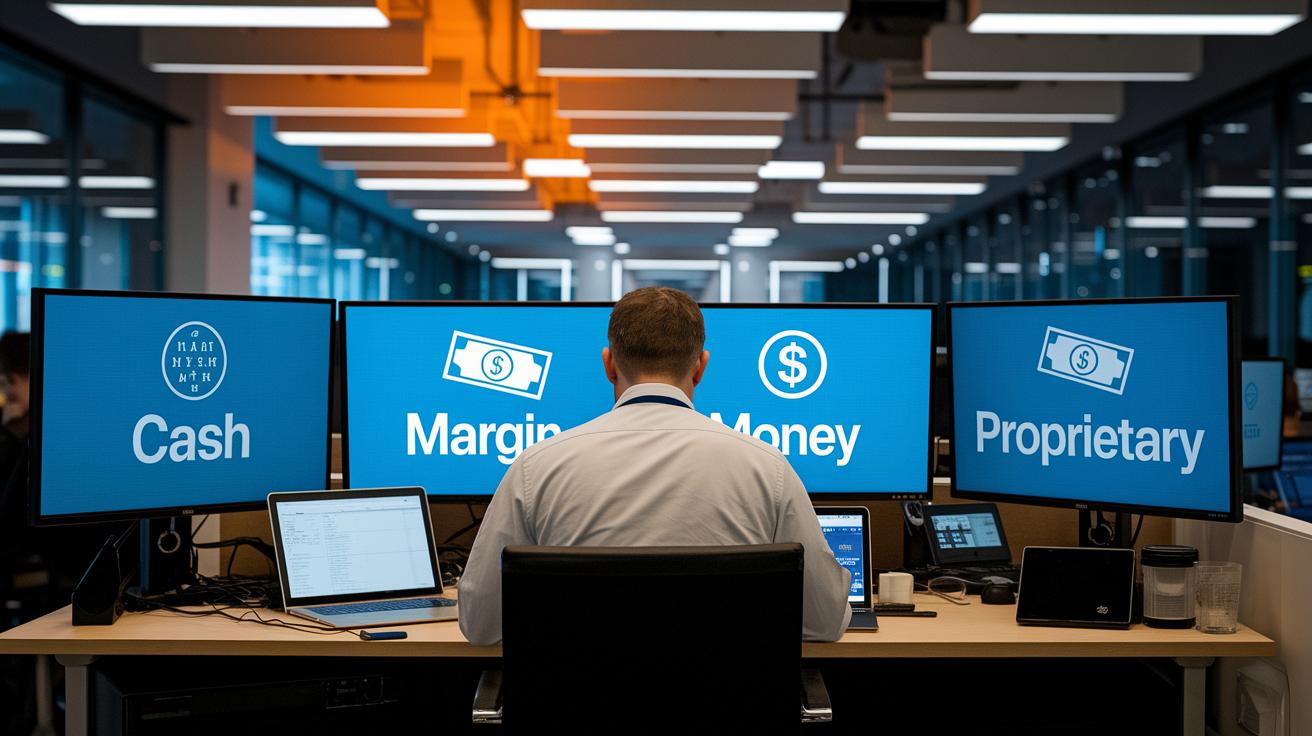
When you dive into day trading, it’s good to know there are different kinds of accounts. With a cash account, you’re trading with money you already have. Everything is settled the same day using your available funds. On the other hand, a margin account lets you borrow money to trade. Just remember, you have to keep a set amount of your own cash in the account (for example, U.S. traders need at least $25,000, though some international brokers might require less).
Then there are proprietary trading accounts, which work a bit differently. Instead of risking your own cash or borrowing, you trade with a firm’s money. These accounts usually work on a profit-sharing basis, which means you get a part of the profits while the firm covers the rest. Often, you’ll need a Series 57 license, and sometimes there are application fees. Think about it like Alex’s journey: he earned his Series 57, joined a firm, and started trading with their funds while sharing in the profits.
Retirement accounts are another option. They let you defer your taxes, which can be a bonus, but they also put limits on things like borrowing and short selling.
- Cash account: Trades with the money you already have and settles quickly.
- Margin account: Offers extra funds through borrowing, but comes with stricter cash requirements.
- Proprietary trading account: Lets you tap into a firm’s money, requires licensing, and works with profit-sharing.
- Retirement account: Provides tax benefits but restricts fast-paced trading moves.
Advanced Tools and Features in a Day Trading Account

Top-notch trading platforms are stuffed with smart tools that boost a basic day trading account into a professional setup. They offer neat candlestick charts that show open, high, low, and close prices over common time frames like 1, 5, or 15 minutes. And guess what? Some even let you peek at tick or 10-second charts. Just think of it like a sudden gust of wind, those quick charts capture market shifts like a fleeting breeze, giving you an edge when things move fast.
Volume bars are built right in to back up trends, so you can easily spot sudden bursts of activity that might signal a breakout. It’s like having a radar that scans for stocks suddenly breaking out of their usual patterns. This way, you can catch early hints of changes and react quicker than ever.
Many platforms now come with algorithmic execution options that can automatically handle trades for you. Imagine setting up conditions where a trade goes off as soon as the market hits your target, almost like having a smart assistant always on watch. Plus, customizable dashboards let you set up real-time account stats just the way you like, keeping all your vital numbers right at your fingertips.
Other handy features include real-time trade alerts and automated strategy execution, which save you time and boost your trading game. If you’re all about having the best tools at your disposal, check out the Free Portfolio Analysis Tool to keep track of your performance and tweak your strategy on the fly.
Tax and Regulatory Considerations for Day Trading Accounts

Day trading isn’t just like buying and selling stocks on a regular day. FINRA’s Pattern Day Trader rule says if you make more than three day trades in five business days, you’re considered a pattern day trader. This means you need to have a margin account with at least $25,000 in equity. Think of it like having a secure vault, you need a strong key (in this case, the required funds) to keep everything safe.
In the U.S., profits from quick trades are taxed as ordinary income. In plain terms, any profit you make from these trades gets added to your other earnings and taxed at your usual rate. Many traders who earn a lot use retirement accounts to delay paying these taxes, which can soften that tax hit right away. And if you’re trading with a firm’s capital as a proprietary trader, you might even have to get a Series 57 license, adding an extra step to verify your account.
Rules and requirements can change unexpectedly. It’s important to keep an eye on your account to make sure it meets the latest guidelines. That way, not only are you following the proper process, but you also know exactly how your gains will be taxed.
Final Words
In the action, we broke down the essentials of opening a day trading account, from initial setup, funding options, and fee structures to risk control and regulatory rules.
We then compared broker offerings, pointed out handy tools for real-time insights, and discussed tax matters.
This article wraps up with a friendly guide to stepping into the market confidently. Embrace what you’ve learned and put your day trading account knowledge to work for solid, informed moves. Happy trading!
FAQ
What does day trading account reddit refer to?
The day trading account reddit discussions share personal experiences, tips, and advice on setting up accounts, highlighting pros, cons, and strategies that many traders have found useful.
What is the best day trading platform for beginners?
The best day trading platform for beginners offers an easy-to-use interface, educational resources, and low fees, making it simple for new traders to execute trades confidently.
What does a day trading account free option mean?
A day trading account free option means you can open and maintain an account without monthly fees, often with free paper trading tools to help you practice trading strategies.
What is considered the best day trading account?
The best day trading account depends on your trading style; many prefer accounts with low fees, real-time tools, and reliable platforms that support rapid trade execution.
What are the top 10 trading platforms?
The top 10 trading platforms include popular brokers like Interactive Brokers, Webull, and Charles Schwab, which are rated for low commissions, robust features, and strong customer support.
How does Webull day trading work?
Webull day trading works by offering zero-commission trades, advanced charting tools, and a user-friendly interface that appeals to both beginners and experienced day traders.
What are day trading platforms?
Day trading platforms are online brokerage interfaces designed for rapid trade execution, featuring real-time charts, trade alerts, and integrated market news to support immediate decisions.
What is a free day trading app?
A free day trading app provides cost-free access to trade execution, live market data, and sometimes paper trading features, offering a low-risk way to explore day trading strategies.
What account is best for day trading?
The best account for day trading varies by trader; margin accounts offer leverage for fast trades but require a $25,000 minimum in the U.S., while cash accounts avoid margin but have slower settlement times.
Why is $25,000 required to day trade?
The $25,000 requirement is set by FINRA’s Pattern Day Trader rule to ensure traders have enough equity to manage multiple intraday trades and help cover potential losses.
Is $100 enough to day trade?
The idea that $100 is enough to day trade is generally unrealistic in markets with pattern day trader rules, though some international brokers may allow lower minimums for riskier, smaller-scale trading.
What is the 2% rule in day trading?
The 2% rule in day trading means risking no more than 2% of your trading capital on a single trade, helping to control losses and preserve overall account balance during market fluctuations.