


Ever wonder if day trading feels like a game of chance sometimes? Imagine having a smart helper that catches shifts in the market and moves super quickly. AI day trading uses computer programs that sort through market data (that’s just the numbers and trends) and give you clear signals on when to buy or sell. It’s like chatting with a friend who offers smart tips while you stay in control.
In this blog, we’ll explore how these tools can help you trade faster and with more confidence. Could mixing things up with AI be the trick to a better trading game? Let’s dive in and find out.
AI Day Trading: Smarter Moves for Winning Markets
AI day trading is all about using smart computer programs that spot trends in the market, send trade signals, and make quick trades. At its heart, it works by automatically generating signals and swiftly placing orders, all while showing you a real-time dashboard that makes market data easy to read. Imagine having a system that updates your portfolio with every market tick, you’re in control with clear, up-to-date visuals.
TrendSpider stands out by offering an AI Assistant and built-in trading bots for about $99.51 a month, giving you quick feedback on your trade ideas. Tickeron provides daily buy and sell signals for just $60 a year, with advanced bot options at $90 a month. Trade Ideas, at roughly $89 per month, covers detailed scans before and after the market opens, while Danelfin offers AI-powered signals from $25 to $70 per month. Finchat.io is another option where you can choose between 10 to 500 AI-generated prompts, costing between $24 and $64 monthly. And if you like free options, Zen Ratings gives you a basic plan or a premium list of top-rated stocks for $234 a year.
These platforms blend basic algorithmic strategies with real-time dashboards that simplify heavy market data into clear, actionable insights. It’s like having a personal trading assistant on your side, always alert and ready to help you make smarter, more precise trade decisions.
Building Your Own AI Day Trading Bot
Start by gathering fresh, live market data, like picking the ripest fruit for a meal. Good data is key, as it fuels your trading bot with the most accurate and real-time info you need. Think of it as assembling the finest ingredients for a gourmet dish.
Next, select a machine-learning model that fits your style. This is where you build the logic for your trades. For instance, if you’re setting up a bot to react to market changes, simple if-then rules can trigger trades when conditions are met. It might take a few tries before you find the perfect model that clicks with your approach.
After that, test your bot with historical data. Backtesting is like rehearsing a play until every line sounds just right. Tools like TrendSpider even offer visual builders, making it easier to craft your bot without needing extensive coding skills.
Finally, connect your system to your brokerage via APIs. This step brings it all together, turning your insights into live, automated actions that work as soon as the market moves.
Comparing Top AI Day Trading Platforms
This section paints a clear picture of how each platform performs and how easy they are to use. For example, TrendSpider’s AI Assistant tweaks its pattern recognition in real-time, helping users keep up during fast market moves. Many traders appreciate its quick response during lively sessions. Meanwhile, Trade Ideas shines by clearly breaking down pre-market shifts, making complex changes easier to understand.
Next up is Tickeron. Its daily signals paired with a simple dashboard make spotting important trends a snap. Some traders even say its clean layout saves them precious time compared to other platforms.
Then there’s Danelfin, which combines easy alerts with more advanced user controls. One trader mentioned, "I enjoy how Danelfin offers a closer look into stock signals, showing detailed performance stats alongside the basics." Not to be left out, Finchat.io and Zen Ratings offer customizable alerts and filtering options, letting you focus on the aspects that matter most to your trading style.
| Platform | Pricing | Key AI Features |
|---|---|---|
| TrendSpider | $99.51/mo | AI Assistant with adaptive pattern recognition, custom alerts |
| Tickeron | $60/yr signals, $90/mo bots | Daily signals combined with intuitive dashboard layout |
| Trade Ideas | $89/mo | Detailed pre-/post-market scans with performance feedback |
| Danelfin | $25–70/mo | AI-powered alerts paired with performance statistics |
| Finchat.io | $24–64/mo | Customizable AI prompts and user-centric notifications |
| Zen Ratings | Free / $234/yr premium | Basic free access enhanced by a premium, curated stock rating list |
This overview highlights the unique strengths of each trading platform. Whether you need advanced tools or a user-friendly setup, these platforms offer innovative ways to keep up with market trends.
AI Day Trading Strategies: Predicting Intraday Market Movements

AI tools help traders catch quick market moves by mixing hard data with familiar chart patterns. They work by using past numbers and live info to predict where the market might head next. For example, Trade Ideas scans for trade ideas before and after the market opens, while Tickeron provides daily signals on when to buy or sell. And then there’s TrendSpider, which automatically finds patterns based on historical ties in the data.
These smart systems are built to notice even the smallest shifts during the day. They let traders jump in fast when the market takes a sudden turn. It’s like having a friend with insider tips who spots hints in the charts that might otherwise go unnoticed.
Here are five favorite AI-driven strategies that many traders find helpful:
- Momentum breakouts
- Mean-reversion oscillators
- Volatility breakout triggers
- Statistical arbitrage patterns
- Sentiment-based entry signals
Each of these strategies shows how AI uses simple statistics and quick predictions to give traders an edge in a fast-paced market.
Managing Risk in AI Day Trading
AI day trading uses smart computer programs to handle trades automatically. These systems are built with strong safety rules to help stop big losses before they can hurt your overall account.
They use dynamic stop-loss rules that adjust as market conditions change, think of it like setting your own safety net that tightens or loosens based on market ups and downs. And on top of that, position-sizing algorithms work together with these rules to make sure no single trade can throw off your balance.
Many trading platforms include built-in checks that keep an eye out for any red flags. For example, if losses hit a certain level, the system automatically pauses trading to protect your funds, just like having an emergency stop button when things get too risky.
Traders also keep track of key numbers such as win/loss ratios and the speed of order execution. By regularly checking these details, they can fine-tune their systems. It’s a bit like how a big company might constantly review its safety measures.
Lastly, AI systems stick to strict compliance rules. They inspect every order to make sure it meets both regulatory and internal guidelines. When you combine dynamic stop-loss rules, smart position sizing, and thorough performance checks, you get an approach that keeps your trading balanced and secure.
Backtesting and Performance Analytics for AI Day Trading
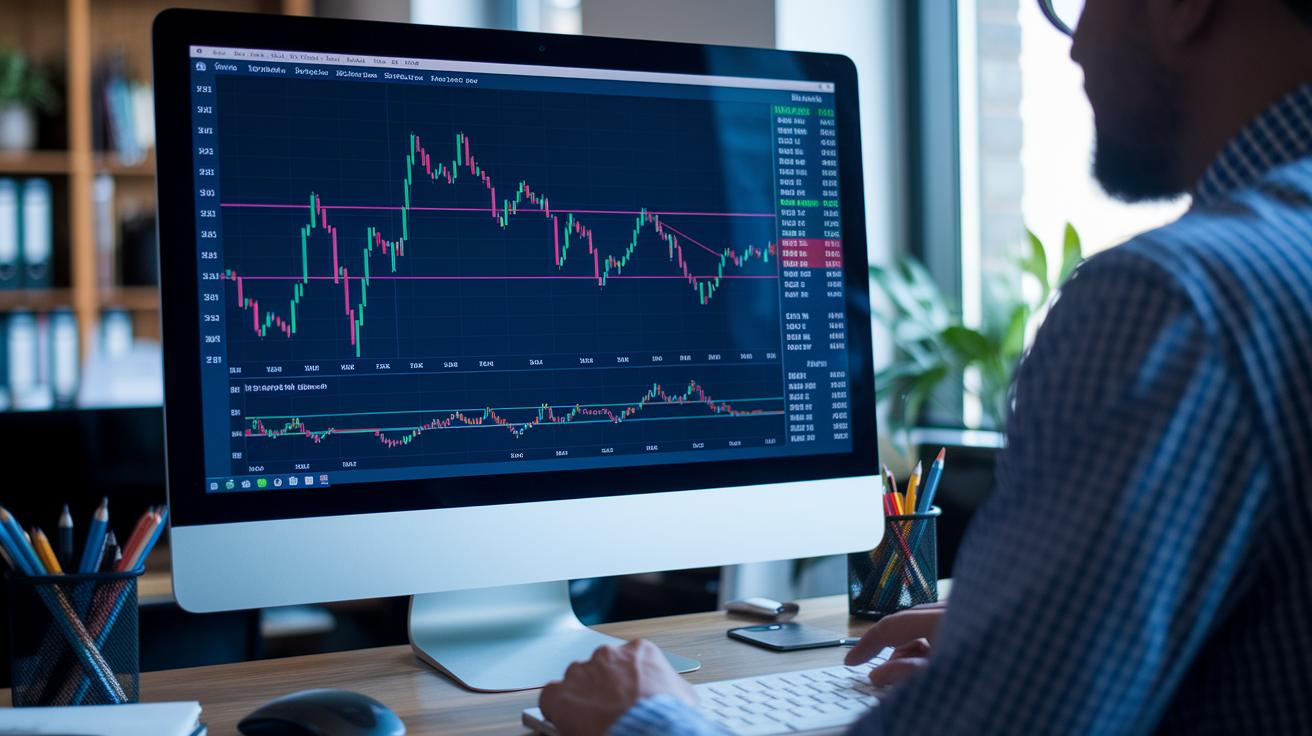
Backtesting is at the heart of a solid trading plan. It lets you try out your trading ideas on past data, making sure your approach holds up over time. By looking at key numbers like the Sharpe ratio (a way to measure risk-adjusted returns), win/loss ratio, and max drawdown (the biggest drop from a high), you see where your model shines and where it might stumble.
By using dependable backtesting methods, traders recreate past market conditions to uncover hidden patterns. Imagine testing a strategy on five years of data and finding that a slight tweak boosted the Sharpe ratio by 15%. That kind of discovery helps you balance potential profit with the risks involved.
Today’s analytics dashboards make it super easy to check your trade performance. They neatly organize your past numbers so you can clearly see trends and notices unexpected dropoffs. With these visual graphs displaying win/loss ratios and sudden drawdowns, you can fine-tune your model before trading live.
Mixing ongoing testing with backtesting gives you a real chance to keep refining your strategy. By regularly comparing your current trade results with historical outcomes, you can adjust your trade rules and risk controls. This sets the stage for smarter trading moves when the market heats up.
Case Studies: Real-World Success with AI Day Trading

Case Study 1: TrendSpider Bot Drives 15% Q1 ROI
TrendSpider’s AI bot has been a real game-changer. It mixes automated signal generation with live market tweaks to deliver a solid 15% return in just the first quarter. This win shows off not only smart design but also smart analysis of top market moves. One trader even said, "I felt like I had a top analyst by my side during volatile market sessions." Testing the bot with both historic data and today’s trends helped it hit the mark. So, if you’re curious, why not try a paper trade on a day trading simulator and see if you feel that extra edge too?
Case Study 2: Tickeron Signals Achieve 20% Monthly Gain
Tickeron’s AI-based signals have been making daily trading decisions a breeze. Their system uses pattern spotting and automatic alerts to rake in a 20% gain over a month. The simple signal dashboard helps traders make quick calls, capturing those short-term market moves without delay. Traders love the clear visuals and straightforward data points that help them act confidently and fast.
Case Study 3: Danelfin AI Model Cuts Drawdown by 30%
Danelfin’s strategy focuses on keeping risk in check. Its AI model is built to spot issues and cut drawdowns, and one period saw a 30% drop in these losses. By keeping a constant eye on market data and tweaking trades in real time, the system gives traders a way to guard their capital during rough patches. This case really shows how automatic adjustments and smart risk control can be key to success in AI day trading.
Final Words
in the action, this article walked through real-time equity analytics dashboards, custom bot building for stock orders, and comparisons of top AI day trading platforms. We explored how statistical forecasting and backtesting help refine automated strategies, along with rigorous measures for risk control. Each section sparked insights on transforming market data into smart, hands-on moves. It’s exciting to see how these practical tools boost your investing confidence and set you up to make smart, informed choices in a dynamic market. Happy trading and keep embracing the pulse of the market!
FAQ
What is TrendSpider, and how does it work in AI day trading?
The mention of TrendSpider describes an online platform offering an AI Assistant and a visual bot builder, helping users receive quick feedback and automate trades—all starting at about $99.51 per month.
What are some popular AI day trading bots and apps for beginners or free trials?
The reference to AI day trading bots and apps highlights options like TrendSpider, Tickeron, and Zen Ratings, which offer free tiers or trials, making automated, signal-based trading accessible to beginners.
Do AI trading bots actually work in the stock market?
The concern about AI trading bots is addressed by noting that these systems analyze market data and execute orders swiftly; many traders report improved efficiency, though results vary with market conditions and strategy.
Can AI day trading help me make $1000 in a day from stocks?
The possibility of earning $1000 a day through AI day trading depends on market conditions, risk tolerance, and trading capital, with results varying based on the strategy and specific system being used.
What is considered the best AI for trading?
The idea of the best AI for trading is subjective; platforms such as TrendSpider, Trade Ideas, and Tickeron are favored for their automated market analysis, real-time trade signals, and user-friendly dashboards.
Is AI successful in trading?
The question of AI’s success in trading is explained by its ability to quickly analyze market data and identify trends, though overall success relies on the quality of the algorithms and prevailing market conditions.
What are some popular AI day trading platforms available today?
The mention of various platforms covers names like Trade Ideas, Tickeron, eToro, Yahoo! Finance, Webull, and TradeStation, each offering automated signals and dashboards designed to support diverse trading strategies.