


Have you ever wondered why investors keep talking about emerging markets? These growing regions are shaking things up with better roads and new digital tech, along with fresh government ideas.
Over the past few decades, these markets have stepped out from the shadows and now play a huge part in global trade, almost half of it. With fast growth and big shifts in how money moves, emerging markets offer a whole new way to look at investing.
In this article, we'll break down the top trends and share how investors can rethink their strategies for a brighter future.
Emerging Global Markets Overview and Key Trends

About 40 years ago, Antoine van Agtmael at the International Finance Corporation introduced the term emerging markets. Since then, these economies have burst onto the scene with rapid growth and a knack for change. They drive the global economy by boosting infrastructure, embracing new technology, and drawing in fresh international investment. If you're curious about the basics, check out what is global markets for a clearer picture.
Emerging markets now account for around 40% of global GDP. Since 2000, their annual growth has averaged 4–5%, a far cry from the roughly 1% seen in more mature economies. Their role in global trade has soared, hinting at rising cross-border capital flows. This surge in participation brings both exciting opportunities and some risks for investors watching the economic shifts.
Investors searching for more diversity and growth are steadily pouring money into these markets. Tools like market trend analysis let you track shifts as funds move across regions to capture fresh opportunities in these vibrant economies.
- Urbanization boosting the need for new infrastructure and services
- Rapid digital adoption sparking innovation and better connectivity
- Shifts in supply chains opening roles for local exporters
- Policy reforms updating the rules and energizing investor confidence
These big trends have fueled a worldwide surge of investment. Investors are increasingly drawn to regions where urban growth, digital advances, and smart policy changes mix together to offer plenty of chances for growth.
Emerging Global Markets Regional Growth Areas
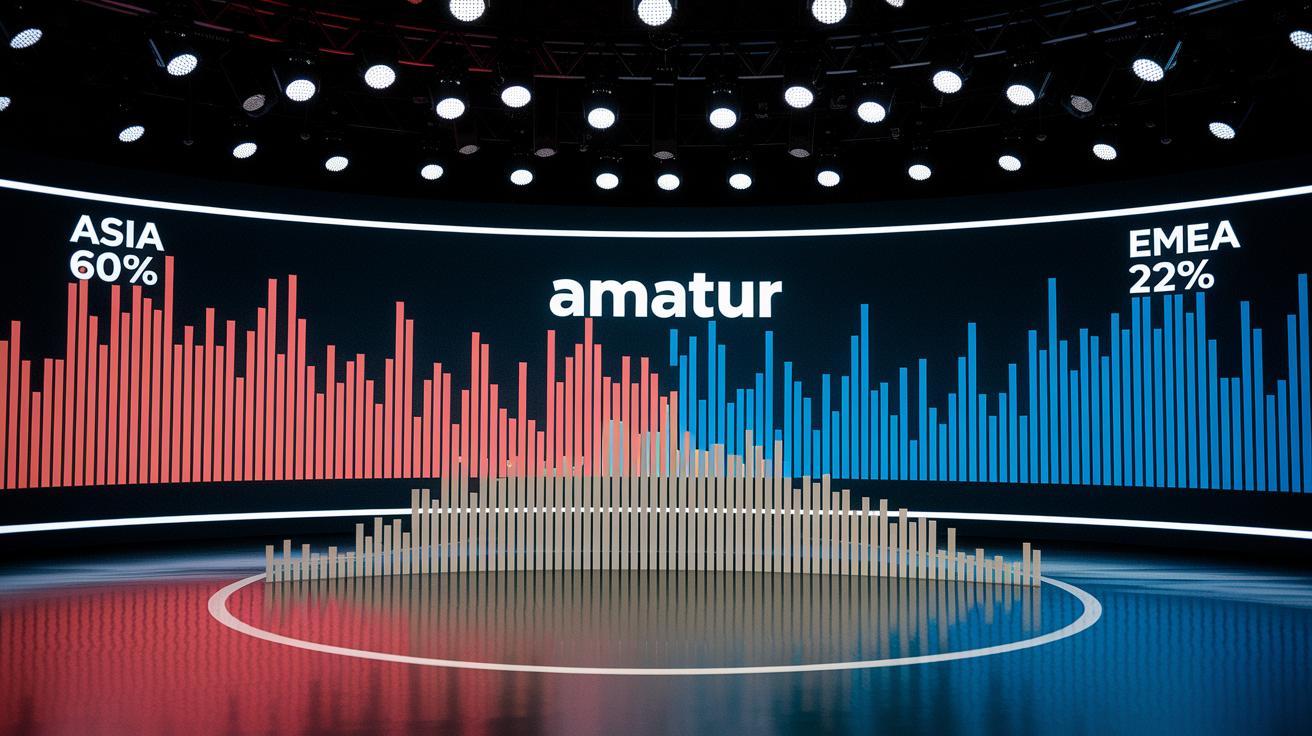
Benchmark indices reveal clear regional differences in emerging markets. Asia makes up about 60% of the MSCI Emerging Markets Index, Latin America around 13%, and EMEA roughly 27%. These figures show how market strength, consumer habits, and capital movement work together in each region.
In Asia and Latin America, the growth drivers are hard to miss. Asia is thriving with fast-growing industrial output and a surge in consumer spending. For example, India's market expanded 6.5% in 2023, supported by booming technology and manufacturing sectors. Vietnam also impressed with gains of 6.8%, reinforcing its role as a key manufacturing hub. Over in Latin America, policy shifts and a rising middle class are boosting agriculture, mining, and retail, which offers investors exciting opportunities.
| Region | 2023 GDP Growth | MSCI EM Index Weight | Key Sectors |
|---|---|---|---|
| Asia | Avg 6.5% | 60% | Technology, Manufacturing, Consumer Goods |
| Latin America | Avg 4-5% | 13% | Agriculture, Mining, Retail |
| EMEA | Varies | 27% | Financial Services, Energy, Telecommunications |
| Frontier Markets | 5-7% | N/A | Consumer Markets, Infrastructure |
Frontier markets in Africa and Eastern Europe now offer a fresh invitation for investors. Markets in Nigeria and Kenya are growing between 5% and 7%, while Eastern European countries are bouncing back after the pandemic. These regions combine strong demographic trends with solid economic recovery, encouraging investors to consider a wider spread of assets for their portfolios.
Emerging Global Markets Investment Opportunities

Emerging markets are buzzing with opportunities, driven by sectors like infrastructure, tech, and sustainability. Investors are drawn by the chance for fast growth, helped along by digital trends and a steady move towards cleaner energy. It feels like these areas are ripe for investments where progress is already happening.
In 2022, private funds played a big role. For example, financing for emerging market infrastructure reached $130 billion, private equity deals hit nearly $200 billion, and the digital-tech segment shot up to an impressive $500 billion. Green bonds also climbed to $150 billion, showing strong backing for eco-friendly projects. These numbers prove that a mix of traditional and new-age financial methods is fueling growth in these regions.
| Sector | Investment Value |
|---|---|
| Renewable Energy Projects | $90 Billion |
| Digital Payments | $120 Billion |
| Consumer Staples | $80 Billion |
| Healthcare Advancements | $70 Billion |
| Logistics and Supply-Chain Solutions | $60 Billion |
The focus on sustainable finance is just as exciting. More and more, firms are using environmental, social, and governance (ESG) factors, basically a way to check how green or fair a project is, to shape their investments. This means portfolios are increasingly geared towards projects that help the planet, all while trying to cash in on growth.
Have you ever noticed how investing in sustainability feels like making choices that are good for both your wallet and the world? For anyone curious to learn more, global market research offers plenty of insights on these trends. In short, emerging markets are not just about rapid growth; they're about investing responsibly in a future that we can all believe in.
Emerging Global Markets Risk Factors and Diversification

Emerging markets can be a wild ride, especially when you factor in things like currency shifts and political changes. For example, currencies in these markets often jitter by around ±8% while those in developed ones only wobble about ±3%. And then there are political events, think elections in Brazil, Mexico, or South Africa, that can really stir the pot. Even sudden trade-policy tweaks might affect export growth by roughly ±2%. So, keeping an eye on risk is super important.
Over a three-year span, emerging markets tend to be more jumpy, showing an average volatility of about 15% compared to 10% in established markets. These numbers mean you should expect more ups and downs with your investments. And while they give a snapshot of risk, remember that things can change in an instant when political events come into play.
When you're building a portfolio, try these strategies:
| Strategy | What It Means |
|---|---|
| Geographic spread | Diversify across regions to help smooth out local shocks. |
| Sector mix | Invest in a mix of industries to avoid putting all your eggs in one basket. |
| Hedging FX | Use foreign exchange strategies to guard against currency swings. |
| Multi-asset funds | Choose funds that combine different asset types for extra protection. |
Regular risk checks are a must. Keep a pulse on political calendars, track economic updates, and lean on real-time market data when needed. Adjusting your holdings based on new insights goes a long way toward keeping your portfolio balanced, even when markets take unexpected turns.
Emerging Global Markets Benchmark Indices and Performance Metrics

Benchmark indices are like a speedometer for emerging markets. They show us how investors value these regions and reveal where money is moving. In simple terms, these indices help us see shifts in market size and how funds are performing.
| Index | 2023 Return | P/E Ratio | AUM |
|---|---|---|---|
| MSCI EM Index | 8.3% | 13x | $850 B |
| FTSE EM Index | 7.5% | 12x | $600 B |
| Global EM Composite | 8.0% | 13x | $80 B |
These numbers show small variations in returns and evaluations, each pointing to a different slice of the market. For example, the MSCI EM Index with its 8.3% return and 13x P/E tells us that there's strong investor interest and a lot of capital at play. On the other hand, the FTSE EM Index has a bit quieter performance. Then there’s the Global EM Composite; its smaller asset size hints at emerging market segments just starting to gain traction.
In a nutshell, these benchmarks give us a clear picture of market strength and the flow of capital. They’re not just numbers from the past, they also capture subtle shifts in investor behavior. And that helps both seasoned and new investors see where value might be hiding.
Emerging Global Markets Allocation and Strategy Frameworks

Investors should consider setting aside about 20–25% of their global portfolio for emerging markets. This target helps you keep a clear limit on exposure while also letting you lean into booming sectors like tech and consumer staples, areas that have been really showing strong growth. The goal is to enjoy the lively pace of emerging markets without putting your overall portfolio stability at risk. Leaning a bit more into these areas can help smooth out ups and downs and boost your growth potential.
When it comes to picking investment options, many investors go for smart choices like multi-asset emerging market funds or laddered-bond strategies. These instruments let you test the waters in different market segments, capturing chances for both rapid growth and steady income. It’s key to choose options that match your own comfort with risk while keeping an eye on current capital flows and important economic signals.
- Define your investment goals clearly to steer your allocation.
- Pick regions and markets where growth looks promising.
- Spread your investments across sectors to lower the risk tied to any one industry.
- Keep a close watch on indicators like PMI numbers and FX reserve trends to spot shifts early.
- Review and rebalance your portfolio each quarter to stay aligned with market moves.
This approach not only helps you achieve your allocation goals but also keeps you flexible, adapting to changes in the economy. In short, it’s a smart way to keep your investments on track while navigating the vibrant landscape of emerging global markets.
Emerging Global Markets Future Outlook and Forecasts

Top experts like the International Monetary Fund are saying emerging markets are set to grow in the years ahead. They estimate a growth of about 4.3% in 2024, driven mainly by strong numbers in India and Southeast Asia. Experts looked closely at key economic signs and believe these regions will keep moving forward thanks to new policies and solid models.
Digital upgrades, changing populations, and big pushes in green energy are shaking up these markets. By 2025, digital technology might double in use, making transactions smoother and more connected. Green-energy projects could reach about $200 billion each year, powering cleaner, more sustainable growth. Plus, some smart initiatives could help lift around 50 million people out of poverty, showing a real promise for both people and the economy.
- Policy reforms: New rules and more open economic policies will make it easier for businesses to grow.
- Tech adoption: Faster digital integration and fresh technology will keep changing how markets operate.
- Infrastructure pipelines: Huge investments in roads, ports, and more will boost trade and connectivity.
For investors, these changes mean a mix of challenges and opportunities. Keeping an eye on return on investment studies and regularly reviewing regional forecasts is key. With these shifts in motion, smart portfolio adjustments can help investors make the most of this exciting, transformative growth.
Final Words
In the action, we reviewed emerging global markets’ rise, from their historical roots and shifting economic footprints to regional growth areas and investment opportunities. We broke down key risk factors, performance benchmarks, allocation strategies, and forecast models with clear data and relatable examples.
Each section reminded us that understanding market trends can lead to smarter moves in these dynamic arenas. With emerging global markets driving change, every insight gives us a brighter outlook for turning analysis into action.
FAQ
Frequently Asked Questions
What are emerging global markets?
Emerging global markets refer to developing economies that show high growth and increased trade. They display rising GDP, expanding financial markets, and growing shares of global trade and capital flows.
What defines emerging global markets in terms of characteristics and growth?
Emerging global markets are defined by steady economic expansion, modernizing financial systems, and increasing international trade, with annual GDP growth outpacing that of developed economies.
What are examples of emerging markets and which countries are included in top lists?
Examples include leading nations in Asia, Latin America, and Africa. Various lists highlight 7, 10, 20, or even 24 key emerging market countries that show strong growth potential and evolving investor opportunities.
How does the IMF emerging markets list help investors?
The IMF emerging markets list helps investors by tracking economic performance metrics like GDP growth and trade volumes, guiding investment decisions based on regions with promising financial and market dynamics.
What key trends shape emerging global markets today?
Key trends include rapid urbanization, digital technology adoption, evolving supply chains, and targeted policy reforms. These trends boost economic activity and open up new investment avenues in these regions.
Why should investors consider opportunities in emerging global markets?
Investors consider emerging markets because they offer higher growth rates, expanding consumer bases, and dynamic investment environments that can diversify portfolios and potentially enhance long-term returns.
How do lists featuring 7, 10, 20, or 24 emerging markets differ?
Different lists of emerging markets simply use varying criteria, such as economic growth, market size, and investor appeal, to group key countries. Each list provides unique insights into high-potential regions based on specific research focuses.