

Social media is awash with glamorous trading screenshots—“I made ₹50,000 in 15 minutes while on vacation!” For anyone grinding through 40-hour workweeks, those numbers look like a ticket to freedom. But trading isn’t a highlight reel; it’s a high-stakes profession where most participants lose money, burn out, or both. Before you hand in your resignation letter, you need to weigh capital requirements, win-loss statistics, lifestyle realities and alternative paths that can still grow your wealth. The six sections below unpack the myths, the math and the mindset you’ll need to examine before leaving a steady paycheck behind.
The Instagram Illusion: Trading Highlights vs. Real Life

Instagram, X and YouTube overflow with eye-popping profit screenshots, beachside laptops and stories of "vacation profits." What you don’t see are the countless losing trades, sleepless nights and blown-up accounts that never make the timeline. Most influencers cherry-pick their best moments, much like showing only winning lottery tickets. Algorithms then amplify that fantasy, making rare successes feel common. If your urge to quit surfaces only after scrolling social feeds, pause. Trading results are highly variable, and survivor bias is rampant. Seek verified track records, not marketing gloss, before believing that trading outshines the stability of your current job.
Capital Check: How Much Money Do You Really Need?

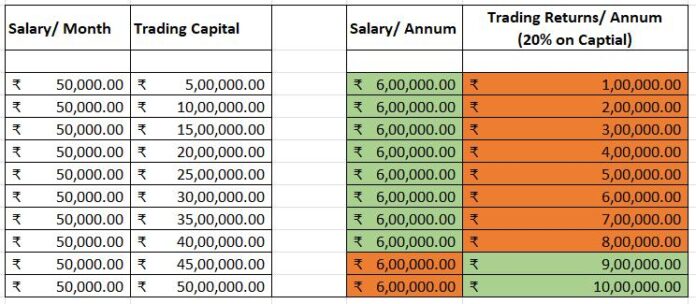
A cushy salary can’t be replaced unless your trading capital is big enough to generate equal, or preferably greater, income after costs and taxes. Suppose you hold ₹25 lakh and aim for an optimistic 20 % annual return; that’s ₹5 lakh per year, roughly ₹42,000 a month. If your job already pays that, why swap certainty for uncertainty? Professionals typically demand at least double their salary before ditching a stable income stream. Factor in platform fees, brokerage commissions and the inevitable losing streaks that erode returns. Without sufficient capital, full-time trading won’t match, let alone exceed, your employment income.
Playing the Percentages: 90 % Lose, 1 % Truly Win

SEBI data is blunt: nine out of ten Indian retail traders lose money. Fewer than 1 % beat even a plain-vanilla fixed deposit. Markets are a zero-sum arena where your win is someone else’s loss, and institutions with deep pockets, faster tech and better research crowd the other side of every trade. A 20 % annual return puts you in elite company, but elite doesn’t mean easy. Are you prepared to place yourself statistically among the top 1 %? If you can’t demonstrate long-term outperformance while still employed, odds are you’ll join the 90 % who bleed capital after quitting.
Beyond the Balance Sheet: Stress, Discipline and Lifestyle

Money isn’t the only variable. Full-time traders wrestle with isolation, screen fatigue and intense emotional swings. One mis-click or reckless revenge trade can erase weeks of gains. Add unpredictable income, no paid leave and zero employer benefits, and the lifestyle looks less idyllic. Discipline must replace the external structure your job provides, waking early, running statistical journals, managing risk with surgical precision. You’re also the IT department, risk manager and mental health coach rolled into one. If your current role already strains your well-being, consider whether trading’s 24/7 mental load will genuinely improve your quality of life.
Why Investing Beats Day-Trading for Most People

Long-term investing, whether through diversified index funds, systematic SIPs or goal-based portfolios, lets you grow wealth while keeping a predictable paycheck. Compounding works silently in the background, freeing you from staring at candlesticks all day. Historical data show that patient investors often outperform active traders after taxes and costs. You can still scratch the market itch: allocate a small “play money” slice for tactical trades while the bulk sits in long-term vehicles. This hybrid model preserves career stability, captures market upside and avoids the psychological roller coaster inherent in full-time trading.
Build a Career, Not Just a Trade Plan

If dissatisfaction pushes you toward trading, first explore alternate career paths, remote work or entrepreneurship within your expertise. Skills earned on the job, project management, analytics, communication, compound like capital and can unlock higher salaries or side businesses. Trading can remain a supplemental pursuit until your edge is proven across multiple market cycles. Should you still dream of trading desks, consider prop-trading firms or hedge-fund analyst roles that provide mentorship, capital and salary cushions. Ultimately, the goal is sustainable livelihood. Make career moves with the same risk-reward scrutiny you’d apply to any trade.