


Ever wonder if old math might guide today's market moves? Think about Fibonacci retracement levels, numbers like 23.6% and 61.8% that hint when prices could slow or shift direction. It’s like having road signs along your trading journey, showing you safe spots to enter or exit a trade.
This method comes from a 600-year-old sequence, revealing hidden clues in market charts that many traders rely on for that extra bit of confidence. Interested in learning how this time-tested approach can light your way in trading?
Fibonacci retracement technical analysis: Smart Trend Signal
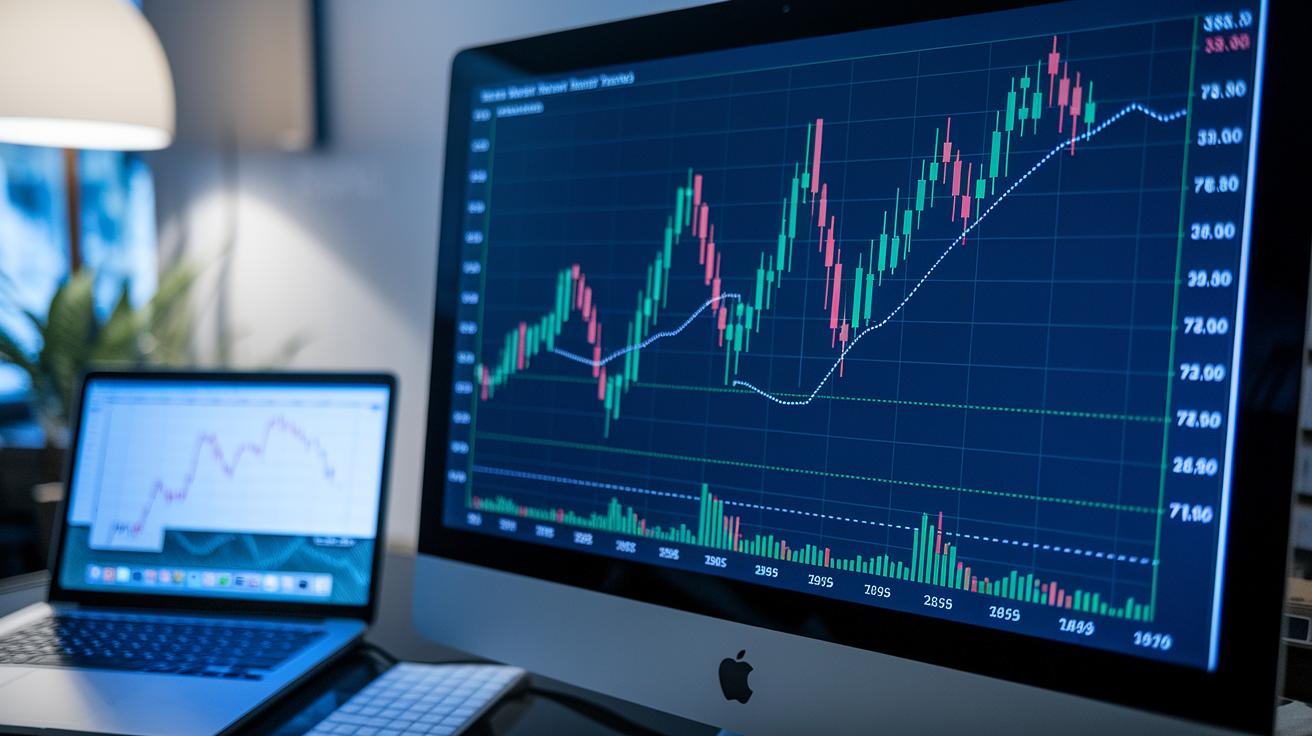
Fibonacci retracement technical analysis is all about watching how a market may reverse after a strong move in one direction. The key percentages, 23.6%, 38.2%, 50%, 61.8%, and 78.6%, come from the Fibonacci sequence, a set of numbers found by Leonardo Pisano back in the early 1400s. These numbers can act like little road signs, helping traders guess where prices might slow down or turn around, whether they’re glancing at an hourly chart or a weekly one.
Traders usually pick two important points on the chart, like a low and a high, measure the total move, and then use the Fibonacci levels to mark potential turning points. Often, these spots line up with areas of support (where prices stop falling) or resistance (where prices stop rising). It’s like spotting hidden signals in the rhythm of the market.
Take a moment to reflect: many traders have noticed that when prices hit the 61.8% level, a strong reversal often follows, almost as if the market is stopping to pay respect to an invisible barrier. This cool observation shows how numbers and the magic of golden ratios can help guide smart moves on when to hop in or duck out of a trade.
Calculating Fibonacci Retracement Levels Step-by-Step

Figuring out Fibonacci retracement levels is pretty simple. It helps you spot key areas on a chart where prices might bounce back or reverse. Think of it like marking important pit stops on a road trip, no matter what asset you’re looking at or which time frame you're using.
First, find the last swing high and swing low on your chart. For example, imagine a price move that goes from $100 up to $150.
Next, work out the price range by subtracting the swing low from the swing high. In our example, that's $150 minus $100, which equals $50.
Then, multiply the range by 0.236. In this case, 0.236 times $50 equals about $11.80. Subtract that from the high to mark your first retracement level.
After that, do the same multiplication with 0.382, 0.500, 0.618, and 0.786. Each calculation gives you another level where the market might change direction. Pretty neat, right?
Finally, draw these points on your chart. It’s even better when you match them up with known support or resistance areas. This whole process turns basic price moves into clear signs, making it easier to decide when the market might turn around.
Drawing Fibonacci Retracement Lines on Trading Charts

Start by opening your favorite charting tool, like TradingView. Drawing retracement lines helps you spot hidden support areas and see scaling opportunities clearly. It’s like getting a sneak peek into the market’s plan.
Choose the retracement tool from the toolbar. Then, pick a clear swing low if the trend is upward, or a swing high if the trend is down, and set that as your starting point. Next, drag the tool to the opposite swing to cover the whole price movement. Make sure the lines you draw match up with known support or resistance areas you’ve seen before.
Adjust the settings so those lines really stand out. And don’t forget to tweak the time-frame overlays to fit your trading strategy; this keeps your analysis steady and reliable.
Imagine placing the tool at a clear low, dragging it to a recent high, and watching the levels line up with where the market has paused before. It’s a simple cue that can guide your decisions, using tried-and-true price action as your guide.
Real-Chart Examples of Fibonacci Retracement Analysis

On Ethereum’s 4H chart from May 23, 2025, a sudden price jump quickly led to a pullback right at the 61.8% mark. Traders saw this as a key signal because it lined up perfectly with a well-known support zone based on price action. Many set stops and planned entries around this level, ready for the market to catch its breath before moving higher. Imagine placing your stop just below the 61.8% line and aiming for gains as prices rebound off this trusted support.
Then, take Bitcoin’s daily chart, which shows its December 2024 all-time highs, reviewed on June 11, 2025. Here, prices bounced off the 38.2% retracement level, almost like a cushion during a brief dip. This level allowed traders to set protective positions and adjust their risk-reward setups with confidence. The golden ratio in these levels offered a clear sign that corrections were in play, highlighting the value of assessing swing highs and lows.
On the S&P 500’s 2H chart from June 11, 2025, small lows aligned with the 50% retracement line, marking a strong support area. This particular level helped day traders decide when to enter or exit trades and where to place their stops. All these examples from TradingView show how using Fibonacci retracement techniques can create smart trade setups by zeroing in on reliable price support zones.
Fibonacci Retracement in Trading Strategies and Risk Management

Market trends can give us subtle hints about where prices might reverse. Many traders keep a close eye on the 61.8% level because when prices bounce there, it signals a potential turning point. They often step in at this mark and set a protective stop-loss just below the 78.6% level. It’s like catching that perfect moment on a chart when everything aligns, much like finding a firm foothold on a steep climb.
Scalpers, for example, focus on quick pullbacks shown on intra-day charts, aiming to profit from rapid price moves before the market decides its next direction. Meanwhile, swing traders watch daily retracements to build positions for longer trends. In the end, it’s all about finding the strategy that fits your own style.
A smart trading plan usually mixes in additional tools, pivot points, moving averages, or clear trendlines, to back up the Fibonacci signals. Using more than one signal helps you feel confident that you’re not jumping in just on a hunch. So if the 61.8% level coincides with a key pivot on the chart, it’s a much stronger cue to proceed.
Think of Fibonacci levels as your guide to balancing risk with reward. They mark your entry point, help set a stop-loss near the 78.6% mark to keep losses in check, and even suggest profit targets using Fibonacci extensions. This method also helps you decide just how much to risk, offering a structured way to ride smart trends towards potential highs.
Adding clear exit signals and timely confirmations can further strengthen this strategy, which is why many seasoned traders swear by it.
Comparing Fibonacci Retracement with Other Technical Analysis Indicators

Fibonacci retracement levels give us a fixed point to look at support and resistance. Unlike moving averages that change with every market swing, Fibonacci levels remain constant thanks to their fixed ratios. This steady reference point can be really helpful when the market pulls back.
RSI divergence is another tool that can back up what you see with Fibonacci levels. When the RSI (a tool that shows if something might be overbought or oversold) acts differently from the price as it nears a Fibonacci level, it could mean the market’s momentum is shifting. Pivot point strategies, on the other hand, focus on price clusters happening during the day, spotlighting short-term trends that might be missed with Fibonacci retracements alone.
MACD crossovers and trendlines add another layer by either supporting the retracement signal or flagging a potential false move. When traders mix these methods, they get a broader view of market behavior and can better estimate where prices might go next.
| Indicator | What It Does |
|---|---|
| Fibonacci Levels | Fixed markers for support and resistance |
| Moving Averages | Adjust with price changes |
| RSI Divergence | Hints at shifts in momentum |
| Pivot Points | Show clusters of intraday prices |
By combining these techniques, traders can sharpen their chart-reading skills and time their trades more effectively. This blend of different tools gives you a clearer picture of the market’s pulse, helping you make more informed decisions.
Limitations and Best Practices for Fibonacci Retracement Technical Analysis

Fibonacci retracements can be a useful tool, but they aren’t magic. You might see a level at 61.8% and expect a bounce, only for the price to push on through without stopping. This reminds us not to lean too hard on one signal, because a single retracement level might lead you astray.
Sometimes, several Fibonacci levels line up, creating overlapping zones that help clear up some of the market noise. Even then, these areas might not hold if the action defies expectations. Think of it like this: if you check multiple charts and notice the same level keeps failing under heavy trading volume, it could be a sign you need to dig deeper.
A good best practice is to look at signals across different time frames. Using several time frames helps you see whether a retracement is likely to hold or if it's just the calm before a deeper pullback. It’s also smart to mix in volume and momentum indicators. For example, if you see a retracement level coincide with a sharp jump in volume, that level might really be acting as strong support or resistance.
Lastly, it’s helpful to go back and test how these retracement levels worked in the past for the asset or time frame you’re trading. By backtesting, you build a more solid approach that blends risk and reward while keeping you alert in volatile markets.
Advanced Tips for Effective Fibonacci Retracement Application

Experienced traders can boost their strategies by mixing in clever Fibonacci retracement techniques. One great trick is pairing Fibonacci with Elliott wave counts. This combo helps confirm the market’s swing patterns so you can spot the best times to enter or exit trades with more precision.
Another smart move is to check different timeframes. When you glance at higher-time-frame clusters, major swing points stand out as strong markers. For instance, if you spot a Fibonacci level on both a daily chart and an hourly chart, it’s a good sign that this level could hold as support or resistance.
It also helps to compare Fibonacci levels with other indicators, like exponential moving averages (which smooth out price movements) and volume-weighted levels (which consider the trading volume). When these signals line up, you can feel a boost in confidence about your trading decision.
Try tweaking your retracement zones for modern swing models too. In other words, adjust the classic Fibonacci method to keep up with today’s fast-paced market, so you can catch even the smaller moves more accurately.
Consider these advanced tips:
- Validate Fibonacci retracement with Elliott wave counts.
- Use higher-time-frame clusters to spot major swings.
- Confirm levels by checking for overlaps with moving averages and volume data.
Using these tips together makes your analysis more reliable and can really sharpen your timing during those volatile market moves.
Final Words
In the action, we explored the basics of Fibonacci retracement technical analysis, breaking down core ratios and how they reveal support and resistance. We detailed the step-by-step process to calculate levels, placed retracement lines on real charts, and compared them with other tools all while discussing risk management and advanced tips.
This guide shows how simple steps and smart strategy work together to boost your confidence in volatile markets. Keep experimenting with these techniques, and watch how they help enhance your investment strategy.
FAQ
Fibonacci retracement levels
Fibonacci retracement levels indicate specific percentages that signal potential support or resistance areas. They typically include 23.6%, 38.2%, 50%, 61.8%, and 78.6% to help traders spot likely reversal points.
Fibonacci retracement strategy for intraday
The Fibonacci retracement strategy for intraday applies these key levels on short-time charts. It reveals quick pullback zones, allowing traders to plan timely entries and exits during the trading day.
Best Fibonacci retracement levels
The best Fibonacci retracement levels usually include 23.6%, 38.2%, 50%, 61.8%, and 78.6%. Traders consider these levels reliable for identifying where price may pause or reverse.
Is Fibonacci retracement a good strategy
Fibonacci retracement can be a good strategy when used alongside other signals. It provides clear zones where price reversals might occur, thus aiding in risk management and precise entry points.
Bullish Fibonacci retracement
Bullish Fibonacci retracement uses these key levels in an uptrend to locate support zones. It helps traders plan long entries by spotting potential bounces during price pullbacks.
Fibonacci retracement golden ratio
The Fibonacci retracement golden ratio refers to the 61.8% level, which is often seen as a pivotal point for reversals. This ratio is favored because it frequently appears in strong market moves.
Fibonacci retracement tool
The Fibonacci retracement tool is available on most charting platforms and allows users to draw retracement lines from swing lows to highs. It visually maps out potential zones of support and resistance.
Fibonacci retracement and extension
Combining Fibonacci retracement with extension techniques helps traders set both entry and profit targets. Retracements determine reversal zones while extensions project how far a price move might continue.
What is a Fibonacci retracement in technical analysis?
A Fibonacci retracement in technical analysis is a method that uses historical price swings to establish key levels. These levels help traders forecast where support or resistance might cause a price reversal.
Do Fibonacci retracements actually work?
Fibonacci retracements work when confirmed by other analysis tools. They highlight important price zones, but it’s best to validate them with additional indicators like volume or trendlines for more reliable signals.
How to correctly use Fibonacci retracement?
To use Fibonacci retracement correctly, identify the most recent swing high and low, draw the levels, and verify alignment with known support or resistance zones. This clear process enhances trade planning and risk control.
What is the golden rule of Fibonacci retracement?
The golden rule of Fibonacci retracement is to look for confluence—when multiple indicators match up around Fibonacci levels. This alignment strengthens the signal and guides more accurate trading decisions.