


Have you ever noticed how one political dispute can flip market movements almost overnight? Whether it's a hot election or a sudden conflict overseas, these events can quickly change how investors feel around the globe. In this post, we'll chat about how such moments shake things up and alter the flow of money worldwide. And by keeping an eye on these shifts, you might just spot a golden opportunity even when the market seems wild. Stick around to see how political risks aren't just about chaos, they can sometimes brighten your investment outlook.
How Geopolitical Risk Shapes Global Markets Today
Geopolitical events really shake up the market we all know. When elections roll around, when political sides get heated, or when conflicts break out between nations, these aren’t just news headlines, they hit the world’s economies hard. Did you know that over half the world’s population will be voting in 2024? Imagine one country’s election shifting market moods across continents. It shows just how tightly politics and finance are woven together.
And it doesn’t stop there. The global financial system is super connected, so a conflict or a heated debate in one corner of the world can make investors around the globe nervous. Think about the ongoing tensions in Europe and the Middle East that keep causing market ups and downs. When political stress surges, it often leads to lower stock returns and more uncertainty in forecasts.
Let’s break it down even more:
- Elections can flip market moods quickly.
- Regional conflicts make investors cautious and increase risk.
- Long-term trends point to high political risk leading to less appealing stock performance.
This tells us that market trends don’t operate in a bubble. They move as fast as the day’s breaking news, almost like keeping pace with a live sports game. By spotting these patterns early, investors can better prepare for sudden changes in our world where politics and money are constantly interacting in dynamic ways.
Measuring Geopolitical Risk for Global Investors
The Geopolitical Risk (GPR) Index, developed by Caldara and Iacoviello in 2022, counts newspaper stories on wars, terrorism, and political tensions. Data for this tool was gathered on January 15, 2024, so it truly reflects the latest global trends. Imagine this: a single headline about a political shakeup can ripple through markets, instantly shifting investor mood.
On the other hand, the World Uncertainty Index (WUI) takes a different approach by using expert surveys to capture economic worry. Even though both indices aim to measure global risk, they do so in their own ways. The WUI is uniquely weighted in the Global Uncertainty Index (GUI), while the GPR sticks to a more focused look at media mentions. Studies show a very light connection between the GUI and market swings measured by the VIX Index, with correlations around 0.03 and 0.05 when using log differences.
Granger causality tests, which check if one thing can predict another, reveal that there isn’t a clear directional link between these tools. In other words, while both measures highlight risk, they don’t really predict market volatility directly. For those curious about deeper risk analysis, this side-by-side approach provides a solid way to think about how global events might stir market reactions.
Historical Impact of Major Geopolitical Events on Global Markets
Over the last 80 years, 36 big events have taught us a lot about how markets react. From Germany’s invasion of France in 1940 to Russia’s moves in Ukraine in 2022, these moments show that local markets can take a steep hit. Yet, when you look at large, global markets, like those tracked by the S&P 500, the recovery is often much quicker. In simple terms, while local markets might drop hard at first, internationally diversified markets bounce back faster.
This history reminds us that a strategy covering many countries can be really powerful. Markets right in the middle of conflict tend to be more up and down, and their recovery is slower when uncertainty sticks around. But if you invest in global markets, you spread out the risk. When comparing key benchmarks from the world’s largest equity markets, it’s clear that diversification helps lessen the impact of regional shocks.
| Event | 3-month return | 6-month return | 12-month return |
|---|---|---|---|
| Germany’s 1940 invasion of France | -5% | -2% | +3% |
| Russia’s 2022 conflict in Ukraine | -6% | -1% | +4% |
These numbers show a clear pattern: local markets are more sensitive to nearby shocks, while having a global mix helps smooth the recovery over time. In essence, a cross-border investment approach can balance risks and capture gains as markets settle down after turbulence.
Case Study: Local Market Vulnerabilities Amid Geopolitical Shocks
Recently, we’ve seen how changes in world politics can stress local markets. After 2022, a surge in energy prices hit German manufacturers hard. Big companies on the DAX did noticeably better than small ones on the MSCI Germany Small Cap Index. In simple terms, larger firms with varied energy plans handled the shock more smoothly.
Over in real estate, tensions between China and the West left clear marks. Imagine a neighborhood where a sudden shift in politics causes home values to drop fast, this happened in Hong Kong while Singapore’s market stayed steady. It’s like one road suddenly slows down dramatically while another keeps moving at its own pace.
Then there was a twist in 2022 when a long-trusted market link changed unexpectedly. Normally, U.S. real yields and gold prices move in opposite directions, but that wasn’t the case this time. Global central banks even picked up more gold. This shows that even well-known patterns can suddenly change under political pressures, so investors should keep an eye on local market risks.
Global markets and geopolitical risk: Bright Investment Outlook
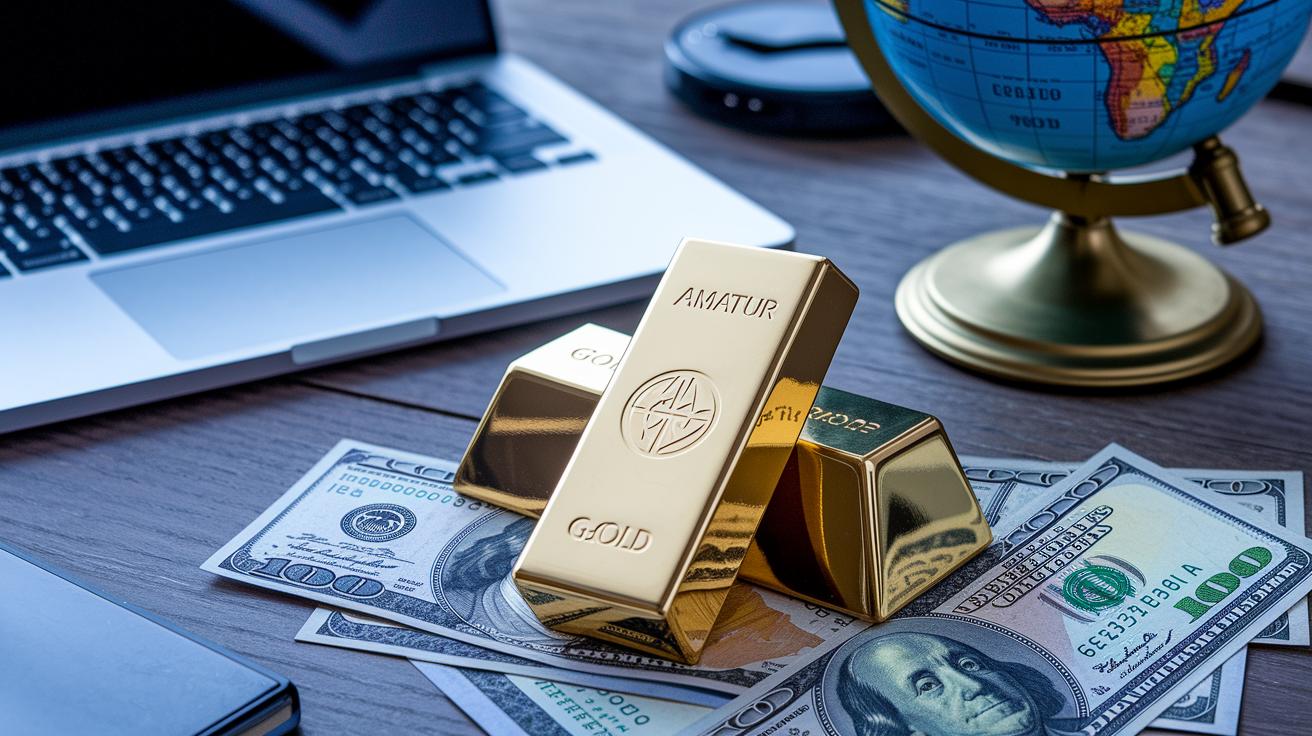
When political tensions and uncertainty rise, savvy investors shift their strategies. They often add more gold to their portfolios, a trusted safe haven, while keeping a good mix of U.S. dollar–based assets. The U.S. dollar stays strong worldwide, helping maintain living standards even when the world gets a bit rocky.
Another smart move is to spread out your investments across different parts of the globe. Instead of putting all your money in one spot, you can invest in North America, Europe, and emerging markets to soften any local impacts. Think of it like building a balanced meal: you mix different food groups to stay healthy. This approach not only adds stability but also opens the door to opportunities in various regions.
Here’s a quick list of actionable steps:
- Boost your gold holdings to protect against market swings.
- Keep a solid share of assets in U.S. dollars.
- Spread your investments across different geographic areas.
- Use smart diversification to aim for steady returns.
These moves help create a defense strategy where weaknesses in one area might be balanced by strengths in another. By putting these pieces together, investors are better prepared for sudden market changes.
Ever notice how, in times of political tension, portfolios that quickly increased their gold and diversified across regions tended to recover more smoothly? It’s a reminder that even in uncertain times, clear strategies can brighten your investment outlook and help you navigate the choppy waters of geopolitical risks.
Forecasting Global Markets Post-2024 Geopolitical Cycles
Emerging election results now mix with growing geopolitical risks, and we need smarter ways to understand these changes. New forecasting methods have moved past simple election chatter. Instead, they blend live updates on diplomatic talks and crisis negotiations to give us a clearer picture of market shifts.
Take one model, for example. It uses smart algorithms to catch small tweaks in a country’s policies that might hint at bigger market moves. Imagine this: a sudden change in international discussions could lead to a quick shift in risk calculations, making investors adjust their asset mix on the fly. One breakthrough algorithm even spotted a trade policy change before any official announcement, giving investors an early warning to act.
Investors can get ahead by combining these fresh forecasting models with flexible portfolio designs. By using data tools to keep tabs on policy changes and diplomatic moves, they can fine-tune their risk exposure and seize new opportunities. This updated approach weaves together geopolitical risks and modern modeling, perfectly matching today’s fast-changing financial scene.
Final Words
In the action, we traced how elections, state conflicts, and shifting geopolitical events ripple across global economies. We explored key indices and real-world case studies that reveal asset vulnerabilities and highlight adaptive portfolio strategies.
Our discussion showed that understanding global markets and geopolitical risk can guide smarter decisions and boost investor confidence. The insights shared empower you to stay alert and proactive. Keep exploring these trends, and let optimism drive your financial strategy forward.